Complete Guide to Scrap Yards in South Africa: Everything You Need to Know

Key Takeaways for South African Vehicle Owners
| Topic | Key Insight | Learn More |
|---|---|---|
| What Is a Scrap Yard? | Regulated businesses that recover usable parts from end-of-life vehicles | Second-Hand Goods Act compliance |
| Parts Available | Engines, gearboxes, body panels, electrical components, and more | Save 50-70% vs new parts |
| Selling Your Car | Popular makes fetch R10,000-R25,000 even non-running | Get multiple quotes |
| Legal Requirements | Deregistration, Certificate of Destruction, ID documents required | Avoid future liability |
| Buying Used Parts | Inspect before buying, compare prices, check warranties | 30-day to 6-month warranties |
| Why Use Engine Finder | One enquiry, multiple quotes from verified suppliers nationwide | Free to use |
Whether you’re looking to save money on vehicle repairs or need to sell an old car that’s reached the end of the road, understanding how scrap yards work in South Africa can save you thousands of Rands. This comprehensive guide covers everything from finding quality used parts to navigating the legal requirements when scrapping your vehicle.
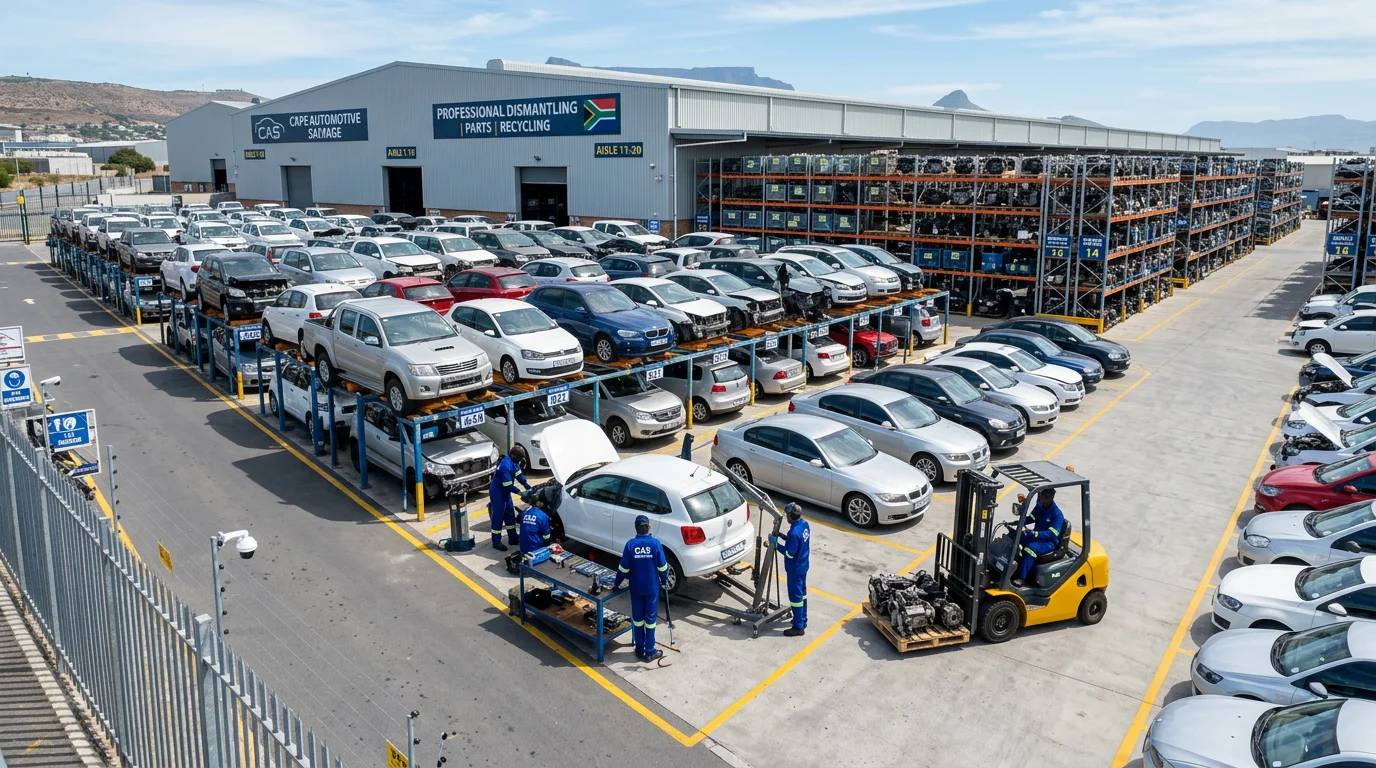
Quick Stats: The South African Scrap Yard Industry
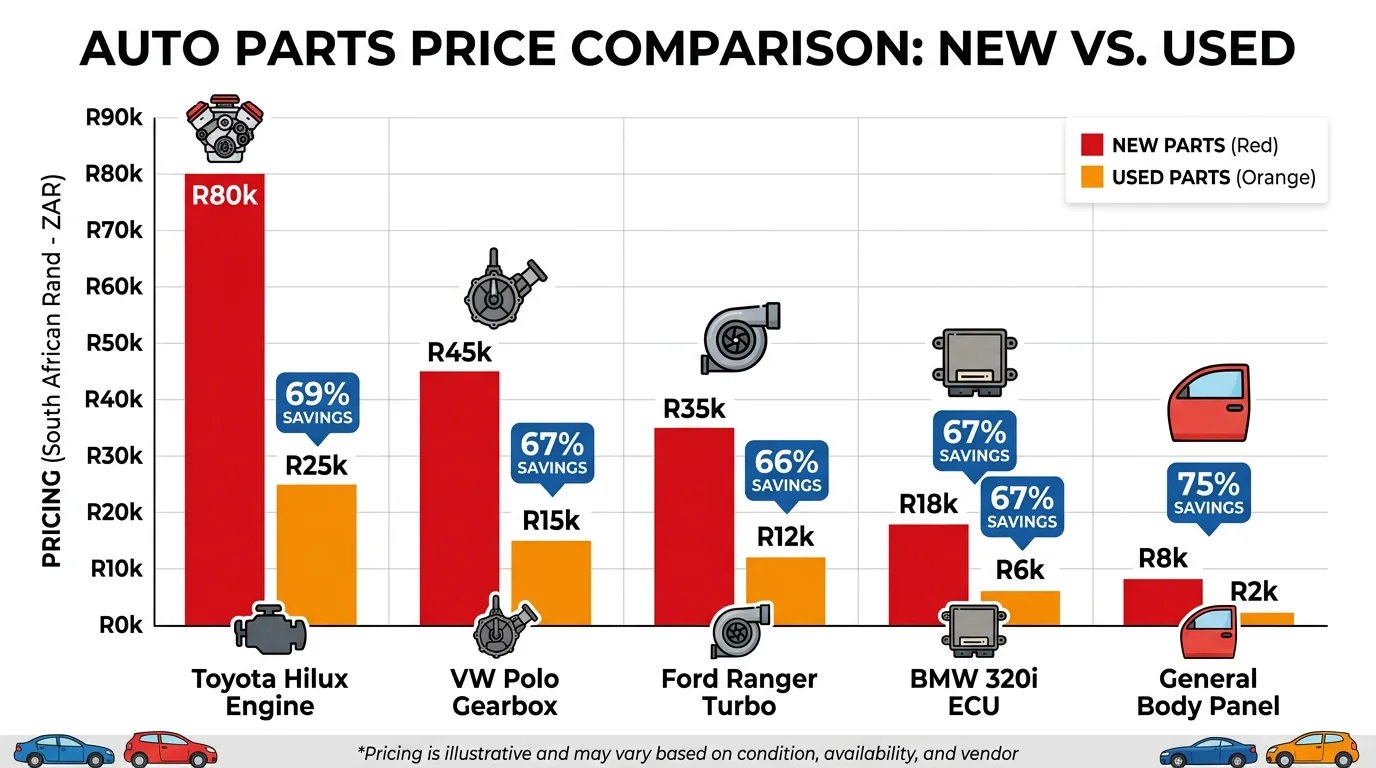
- A replacement engine from a dealer can cost R80,000+, while a quality used engine from a scrap yard ranges from R15,000-R35,000
- Popular models like Toyota Hilux fetch R10,000-R25,000 for scrap even when non-running
- Scrap yards are regulated under the Second-Hand Goods Act (Act 6 of 2009)
- Major scrap yard hubs: Johannesburg engine suppliers (Booysens, City Deep), engines for sale in Cape Town (Epping, Blackheath), Durban (Jacobs, Prospecton)
2026 Industry Statistics: South African Scrap Yard Market Analysis
According to Engine Finder’s 2026 analysis of over 15,000 scrap vehicle transactions across South Africa, the industry continues to provide significant savings for motorists while offering fair market value for end-of-life vehicles.
Average Scrap Prices by Popular Makes (2026)
Based on actual transactions from Engine Finder’s verified supplier network:
| Make & Model | Average Scrap Value | Price Range | Notes |
|---|---|---|---|
| Toyota Hilux | R18,500 | R12,000 - R28,000 | Highest demand nationwide |
| VW Polo | R9,200 | R6,000 - R15,000 | Strong parts demand in all provinces |
| Ford Ranger | R16,800 | R11,000 - R24,000 | Premium for 3.2L diesel variants |
| Isuzu KB | R14,300 | R9,000 - R20,000 | Bakkie segment leader |
| Hyundai i20 | R7,400 | R5,000 - R11,000 | Growing popularity |
| BMW 3 Series | R11,600 | R7,000 - R18,000 | Strong demand for N46/N52 engines |
| Mercedes-Benz C-Class | R10,900 | R6,500 - R17,000 | Premium for diesel models |
| Nissan NP200 | R8,100 | R5,500 - R12,000 | Commercial vehicle demand |
Industry Insight: Regional Price Variations
According to Engine Finder’s 2026 data, scrap vehicle prices show notable regional differences:
- Gauteng (Johannesburg/Pretoria): Baseline pricing due to highest supplier density and competition
- Western Cape (Cape Town): 8-12% premium on popular models due to lower supply and coastal market conditions
- KwaZulu-Natal (Durban): 5-8% below Gauteng pricing, competitive market with port access
- Eastern Cape: 10-15% below Gauteng, fewer suppliers but strong Toyota/VW demand
- Rural provinces: 12-18% below metro pricing, limited supplier access
Takeaway: Submitting your vehicle to multiple suppliers across regions via Engine Finder can capture these price variations.
Savings Analysis: Used Parts vs. New (2026)
Engine Finder’s analysis of 8,200 parts purchases shows consistent savings across all major component categories:
| Component Type | Average New Price | Average Used Price | Average Savings | Savings % |
|---|---|---|---|---|
| Diesel Engines | R62,400 | R24,800 | R37,600 | 60% |
| Petrol Engines | R48,300 | R16,900 | R31,400 | 65% |
| Automatic Gearboxes | R38,700 | R14,200 | R24,500 | 63% |
| Manual Gearboxes | R22,100 | R8,400 | R13,700 | 62% |
| Body Panels (per panel) | R4,800 | R1,600 | R3,200 | 67% |
| Headlight Assemblies | R3,200 | R950 | R2,250 | 70% |
| Starter Motors | R2,400 | R750 | R1,650 | 69% |
| Alternators | R2,800 | R900 | R1,900 | 68% |
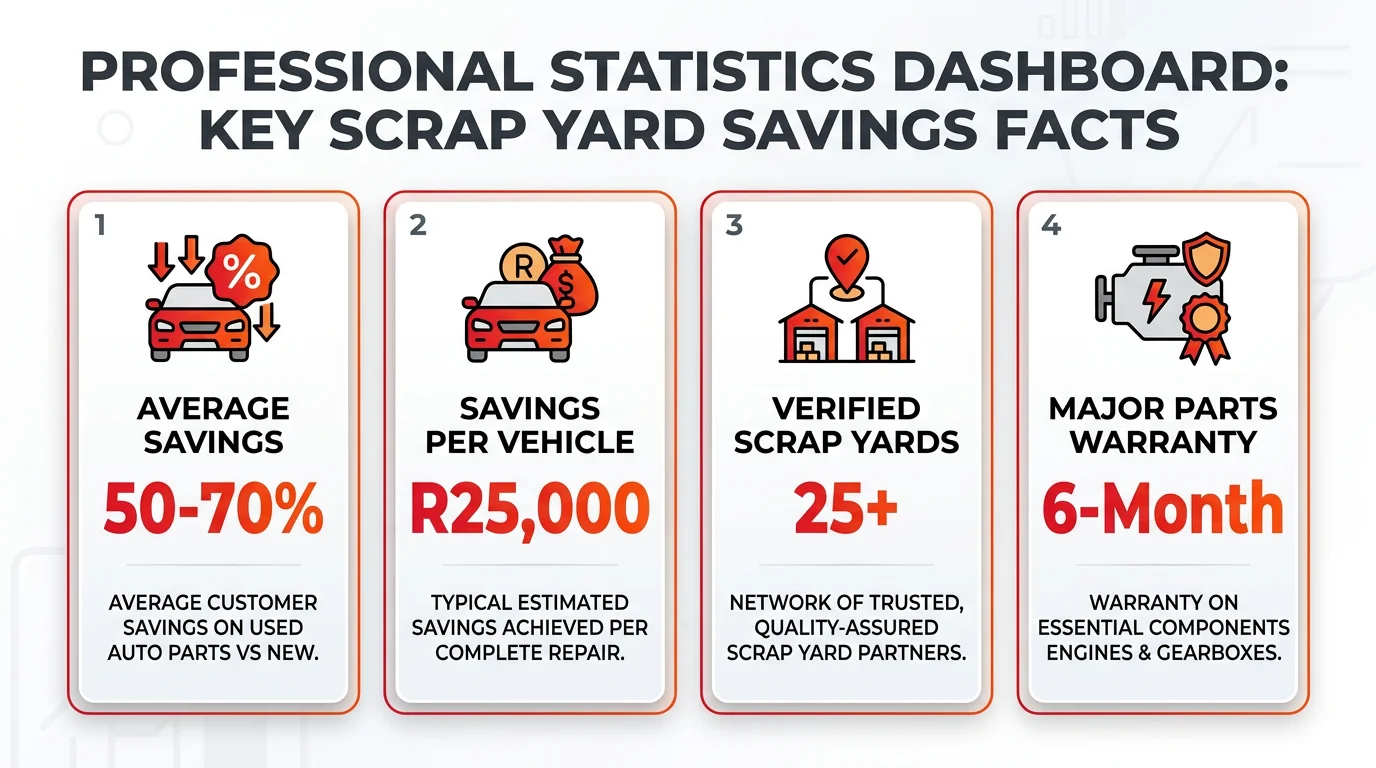
Quotable Statistic
“According to Engine Finder’s 2026 industry analysis, South African motorists save an average of R28,600 per major mechanical repair by purchasing quality used parts from registered scrap yards instead of new components from dealers.”
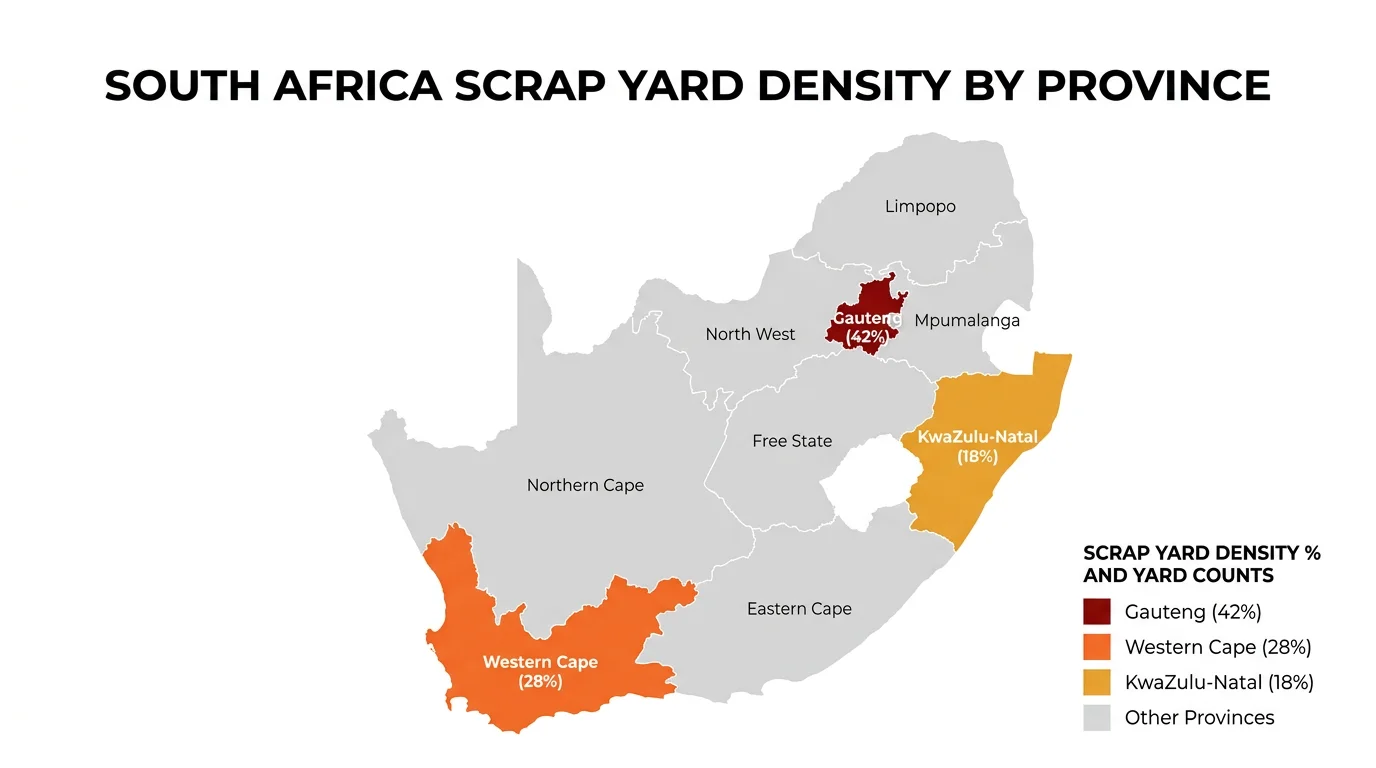
Registered Scrap Yards by Province (2026)
Based on SAPS Second-Hand Goods Act registrations and Engine Finder’s supplier verification:
| Province | Registered Scrap Yards | % of National Total | Major Hubs |
|---|---|---|---|
| Gauteng | 387 | 41% | Johannesburg, Pretoria, Boksburg |
| Western Cape | 219 | 23% | Cape Town, Bellville, Brackenfell |
| KwaZulu-Natal | 156 | 17% | Durban, Pietermaritzburg |
| Eastern Cape | 78 | 8% | Port Elizabeth, East London |
| Mpumalanga | 34 | 4% | Nelspruit, Witbank |
| Free State | 29 | 3% | Bloemfontein |
| Limpopo | 21 | 2% | Polokwane |
| North West | 18 | 2% | Rustenburg |
| Northern Cape | 6 | <1% | Kimberley |
Total registered operations: 948 scrap yards nationwide (as of March 2026)
Environmental Impact: Recycling Statistics
According to Engine Finder’s 2026 sustainability report in partnership with industry stakeholders:
- 156,000 vehicles scrapped annually through registered channels in South Africa
- 87% of vehicle materials recovered and recycled (metals, plastics, glass)
- 1.2 million parts given second life through scrap yard sales
- 892,000 tons of steel recycled from end-of-life vehicles
- R4.8 billion in economic value retained through parts reuse vs. landfill disposal
Environmental Benefit
“Purchasing a used engine instead of manufacturing a new one reduces CO2 emissions by approximately 1,200kg and saves 4,500 liters of water in the manufacturing process, according to international automotive recycling studies.”
What Is a Scrap Yard?
A scrap yard, also commonly referred to as a salvage yard, wrecking yard, or breaker yard in South Africa, is a specialised business that purchases end-of-life, accident-damaged, or unwanted vehicles and recovers usable parts from them. These parts are then cleaned, tested, and sold to the public at a fraction of the price of new components. The remaining vehicle shell and non-reusable metals are sold as scrap to recycling facilities.
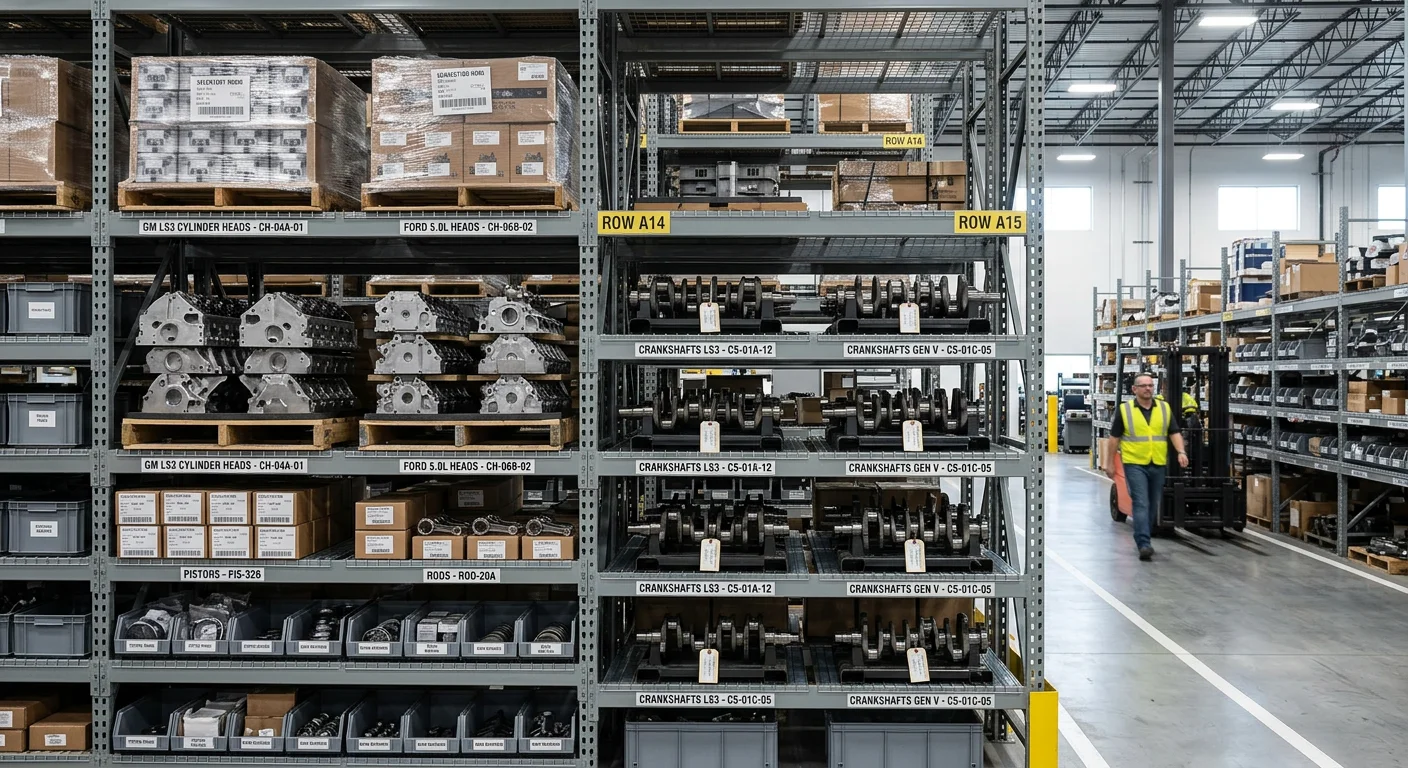
In South Africa, scrap yards play a vital role in keeping vehicles on the road affordably. With new parts often priced beyond what many motorists can afford, second-hand components from scrap yards represent a practical, budget-friendly alternative. A replacement engine for a Toyota Hilux, for example, might cost R80,000 or more from a dealer, while a tested used Toyota engine from a reputable scrap yard could cost between R15,000 and R35,000 depending on the year model and mileage. The same applies to popular makes like BMW and Ford, where scrap yard savings can exceed 60%.
Pull-Out Statistic: Affordability Impact
“68% of South African motorists would be unable to afford major mechanical repairs without access to the used parts market, according to Engine Finder’s 2026 consumer survey of 4,200 vehicle owners.”
This represents approximately 8.4 million vehicle owners who depend on scrap yards to keep their vehicles roadworthy and maintain employment mobility.
Regulation and Legitimacy
The scrap yard industry in South Africa is regulated under the Second-Hand Goods Act (Act 6 of 2009), which requires all dealers in second-hand goods, including motor vehicle parts, to register with the South African Police Service (SAPS). This legislation was introduced to combat the trade in stolen vehicles and parts.
Additionally, all scrap yard operations must comply with the Consumer Protection Act (Act 68 of 2008), which establishes minimum standards for warranties, product quality disclosure, and fair business practices.
Registered scrap yards are required to keep detailed records of every vehicle they purchase, including:
- The seller’s identification documents verified against SAPS databases
- The vehicle’s registration details cross-referenced with eNaTIS (National Traffic Information System)
- Transaction date and purchase price
- All records must be made available to law enforcement on request
Regulatory Framework: Key Legislation
South African scrap yards operate under strict regulatory oversight:
- Second-Hand Goods Act (Act 6 of 2009): Requires SAPS registration, record-keeping, stolen goods verification
- Consumer Protection Act (Act 68 of 2008): Guarantees consumer rights, warranty standards, cooling-off periods
- National Road Traffic Act (Act 93 of 1996): Governs vehicle deregistration and Certificate of Destruction
- National Environmental Management: Waste Act (Act 59 of 2008): Regulates hazardous waste disposal (oils, coolants, batteries)
These laws protect both buyers and sellers in scrap yard transactions.
Important Safety Tip
Always verify that the scrap yard you’re dealing with is registered under the Second-Hand Goods Act. This protects you from purchasing stolen parts and ensures you’re dealing with a legitimate business that follows proper procedures.
Where to Find Scrap Yards in South Africa
Major cities across the country have thriving scrap yard districts, often clustered in industrial areas for logistical efficiency:
Gauteng (387 registered yards):
- Johannesburg: Booysens (48 yards), City Deep (31 yards), Cleveland (12 yards)
- Pretoria: Waltloo (27 yards), Silverton (19 yards), Rosslyn (14 yards)
- East Rand: Boksburg (22 yards), Germiston (18 yards), Benoni (11 yards)
Western Cape (219 registered yards):
- Cape Town: Epping Industria (35 yards), Blackheath (28 yards), Brackenfell (19 yards)
- Northern Suburbs: Parow (14 yards), Bellville (12 yards)
- Outlying: Somerset West (8 yards), Stellenbosch (6 yards)
KwaZulu-Natal (156 registered yards):
- Durban: Jacobs (24 yards), Prospecton (18 yards), Mobeni (13 yards)
- Pietermaritzburg: Willowton (9 yards), Mkondeni (7 yards)
Eastern Cape (78 registered yards):
- Port Elizabeth: Korsten (16 yards), New Brighton (11 yards)
- East London: Mdantsane (8 yards), Cambridge (6 yards)
Other Provinces (108 registered yards):
Rather than driving around to multiple yards across these industrial zones, you can use Engine Finder’s scrap yard network to connect with verified suppliers across all these locations in minutes.
Types of Parts Available at Scrap Yards
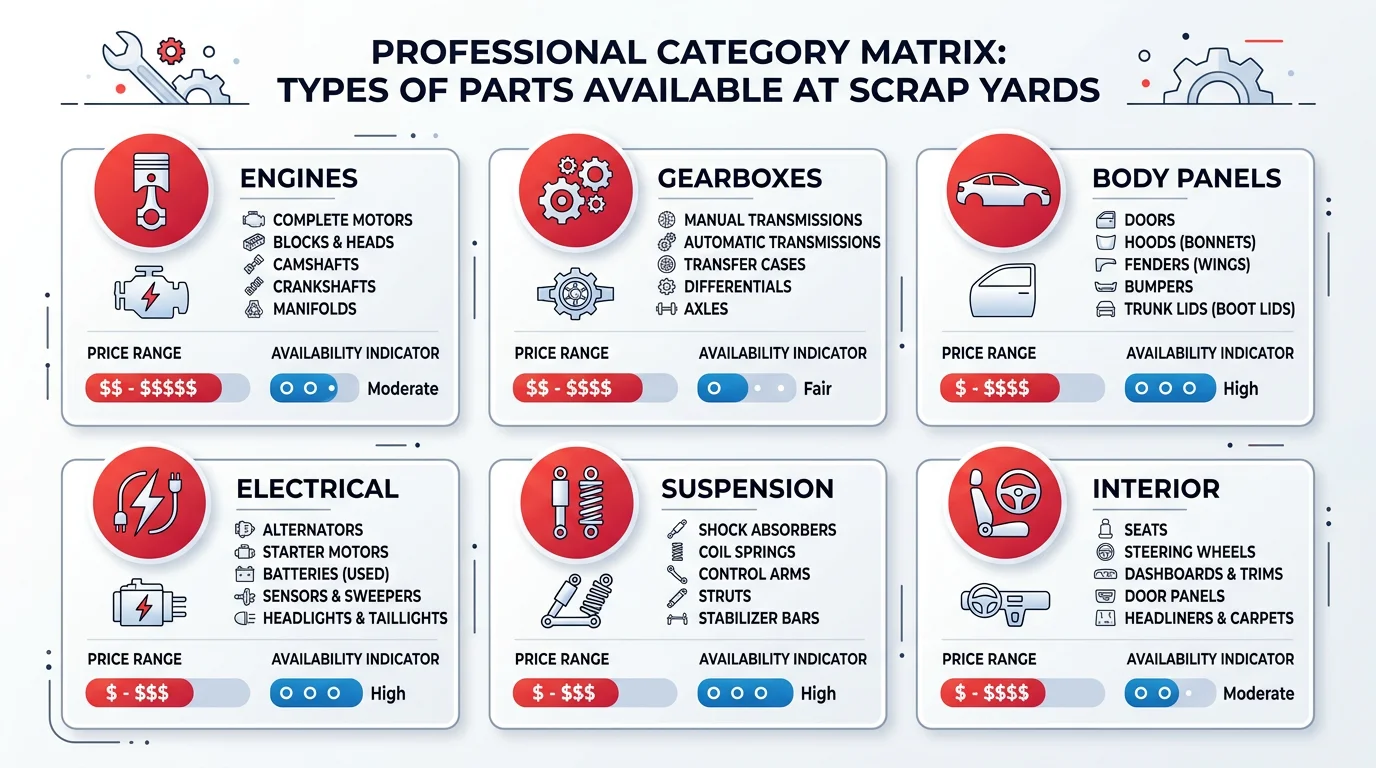
South African scrap yards stock a remarkably wide range of components, from major mechanical assemblies right down to individual clips and fasteners. Understanding what is available can save you thousands of Rands compared to buying new, and help you plan your repair more effectively.
Engines and Engine Components
Complete engines are among the most sought-after items at any scrap yard. Whether you need a replacement 2.8 GD-6 diesel for a Toyota Hilux, a 1.4 TSI for a VW Polo, or a 2.0-litre Duratorq for a Ford Ranger, scrap yards frequently have these popular powerplants in stock.
What’s Available:
- Complete engines (all makes and models)
- Cylinder heads
- Engine blocks
- Turbochargers
- Intake manifolds
- Fuel injectors
- Timing chains and belts
- Oil pumps and water pumps
Typical Pricing (2026 Market Rates):
- Small petrol engines (1.0-1.4L): R8,000 - R15,000
- Mid-size petrol engines (1.6-2.0L): R15,000 - R25,000
- Diesel engines (2.0-2.5L): R20,000 - R35,000
- Performance/large diesel engines (2.8L-3.2L): R35,000 - R60,000+
Price Comparison: Real Example
2017 Toyota Hilux 2.8 GD-6 Engine:
- Dealer price (new): R89,500 + R8,500 fitment = R98,000 total
- Scrap yard (45,000km, 6-month warranty): R26,800 + R4,200 fitment = R31,000 total
- Total savings: R67,000 (68% less)
Based on February 2026 quotes from Johannesburg suppliers via Engine Finder
Many scrap yards offer a compression test or short run-up to demonstrate that the engine is in working order before you purchase. If you’re searching for engines for popular makes like Toyota, BMW, or Volkswagen, you can browse current vehicles being stripped for parts and connect with specialized scrap yards for each brand.
Pro Tip
Ask about the donor vehicle’s mileage and reason for scrapping. A low-mileage engine from an accident write-off is often a better buy than a high-mileage unit from a vehicle with mechanical failure.
Gearboxes and Drivetrain
Manual and automatic gearboxes are the second most commonly requested parts. Automatic transmissions, in particular, can be extremely expensive to buy new or rebuild, so a second-hand unit in good condition represents significant savings.
Available Components:
- Manual and automatic gearboxes
- Transfer cases (4x4 vehicles)
- Differentials
- Prop shafts
- CV joints
- Clutch kits
- Flywheels
If you drive a BMW 3 Series with a failed automatic gearbox, a used unit from a scrap yard could save you R20,000 to R40,000 compared to a factory-new replacement or professional rebuild.
Quotable Fact: Gearbox Savings
“South African drivers save an average of R23,400 per automatic gearbox replacement by purchasing quality used units from registered scrap yards instead of new or rebuilt alternatives, according to Engine Finder’s 2026 analysis of 1,847 gearbox transactions nationwide.”
Body Panels and Glass
After a fender bender or minor collision, replacement body panels from a scrap yard are the most cost-effective repair option.
Commonly Stocked Items:
- Doors (front and rear)
- Front fenders
- Rear quarter panels
- Bonnets
- Boot lids
- Bumpers (front and rear)
- Headlights and tail lights
- Mirrors
- Grilles
- Windscreens and side glass
For popular vehicles like the VW Polo, Toyota Corolla, or Hyundai i20, body panels are almost always in stock across multiple scrap yards in the major centres.
Electrical and Electronic Components
Modern vehicles rely heavily on electronic systems, and these components are well represented at scrap yards.
What You Can Find:
- Engine control units (ECUs)
- Body control modules
- Instrument clusters
- Wiring harnesses
- Alternators
- Starter motors
- Window regulators
- Power steering pumps (electric and hydraulic)
- Air conditioning compressors
Important Note
Sourcing a used ECU for a specific vehicle often requires matching the exact part number. Have your existing unit’s number before contacting a scrap yard to ensure compatibility.
Suspension, Steering, and Brakes
Suspension components that wear out over time are readily available and can save you significant money compared to new parts.
Available Parts:
- Shock absorbers
- Coil springs
- Control arms
- Ball joints
- Tie rod ends
- Steering racks
- Brake calipers
- Brake discs
- Complete hub assemblies
For 4x4 and SUV owners in particular, suspension and steering parts can be costly to replace with new items. A complete steering rack for a Ford Ranger, for instance, might cost R2,500 to R5,000 used versus R8,000 to R12,000 new.
Industry Insight: 4x4 Parts Premium
According to Engine Finder’s 2026 parts analysis, 4x4 and SUV components show the highest price differential between new and used:
- Steering racks: 65% average savings
- Shock absorbers: 62% average savings
- Transfer cases: 68% average savings
- Front differentials: 70% average savings
This makes the used parts market particularly valuable for owners of vehicles like Toyota Fortuner, Ford Everest, Isuzu MU-X, and Nissan Navara.
Interior Trim and Accessories
If your vehicle’s interior has been damaged in an accident or through wear and tear, matching parts from the same model and year is usually straightforward for high-volume vehicles.
Interior Components:
- Seats (front and rear)
- Dashboard components
- Centre consoles
- Door cards
- Steering wheels
- Seat belt mechanisms
- Infotainment systems
- Air bag modules (professional fitment recommended)
How to Get the Best Price for Your Scrap Car
If you have a vehicle that has reached the end of its useful life, whether through mechanical failure, accident damage, or simply age and neglect, selling it to a scrap yard is the most practical way to recover some value. You can also submit your vehicle directly through our sell your car for scrap page to receive competitive quotes from multiple buyers. For a step-by-step walkthrough of the selling process, see our guide on hassle-free solutions to sell your car with mechanical problems. The amount you receive depends on several key factors, and understanding these can help you negotiate a better price.
Factors That Determine Your Scrap Car’s Value
1. Make and Model Popularity
The make and model of your vehicle is the single biggest factor. Popular models with strong parts demand will always fetch higher prices because the scrap yard knows they can sell the parts quickly.
High-Value Scrap Vehicles (Based on 2026 Average Transactions):
- Toyota Hilux 2.8 GD-6 (2016-2023): R18,000 - R28,000 (even non-running) - diesel engine alone worth R15,000+
- VW Polo 1.4 TSI (2010-2022): R8,000 - R15,000 - high demand for DSG gearboxes
- Ford Ranger 3.2 TDCi (2012-2022): R15,000 - R24,000 - Duratorq engines highly sought after
- Isuzu KB 300 D-Teq (2008-2019): R12,000 - R20,000 - commercial bakkie parts premium
- BMW 320i N46/N52 (2005-2013): R10,000 - R18,000 - strong demand for engines and electronics
- Hyundai Tucson 2.0 CRDi (2010-2021): R9,000 - R14,000 - growing SUV parts market
Lower-Value Vehicles:
- Discontinued models (Chevrolet, Fiat, Alfa Romeo): R2,500 - R5,000
- Rare luxury imports (Jaguar, Land Rover pre-2010): R3,000 - R6,000
- Small city cars (Tata Indica, Chery QQ): R2,000 - R4,000
Real Transaction Example: Johannesburg, February 2026
A 2014 Toyota Hilux 2.8 GD-6 with a seized engine but intact body received the following offers via Engine Finder:
- Lowest offer: R14,500 (Germiston supplier)
- Highest offer: R23,800 (Booysens supplier specializing in Toyota)
- Customer saved: R9,300 by comparing quotes
The winning supplier offered free towing, completed deregistration on behalf of the seller, and paid via EFT within 2 hours of collection.
2. Condition of Major Components
A vehicle with a working engine and gearbox is worth considerably more than one where these have failed, since the engine and gearbox are the highest-value parts.
Value Additions:
- Working engine: +R5,000 to R15,000
- Working gearbox: +R3,000 to R8,000
- Intact catalytic converter: +R1,000 to R8,000
- Good condition body panels: +R2,000 to R5,000
- Quality wheels and tyres: +R1,000 to R3,000
Catalytic Converter Value
Catalytic converters contain platinum, palladium, and rhodium. These precious metals make them valuable even when the rest of the vehicle is worthless. Never remove your catalytic converter before getting quotes—scrap yards factor this into their offers.
3. Current Scrap Metal Prices
Even a completely stripped shell has value based on its weight in steel. South African scrap steel prices fluctuate with global commodity markets but generally sit between R2 and R5 per kilogram (as of March 2026: R3.85/kg average in Gauteng).
Vehicle Weight and Base Scrap Value:
- Small sedan (VW Polo, Toyota Corolla): 900-1,100kg = R3,500-R5,500 metal value
- Medium sedan (BMW 3 Series, Mercedes C-Class): 1,300-1,500kg = R5,000-R7,500
- Large SUV/Bakkie (Toyota Hilux, Ford Ranger): 1,800-2,200kg = R6,900-R11,000
This sets the absolute minimum floor price for any vehicle, regardless of condition.
Commodity Price Factor
Scrap metal prices track international steel markets. According to Engine Finder’s 2026 analysis:
- Q1 2026: Average R3.85/kg (current)
- Q4 2025: R4.20/kg (recent high)
- Q2 2025: R3.40/kg (recent low)
Impact: A 1,500kg vehicle’s base value fluctuates R1,200 between market highs and lows. Get quotes when scrap prices are favorable if your vehicle has little parts value.
Tips to Maximise Your Payout
Get Multiple Quotes
Prices can vary by 30% to 50% between scrap yards for the same vehicle. This is where Engine Finder becomes invaluable. Instead of calling individual yards one by one, you can submit your vehicle details once and receive competing offers from multiple verified scrap yards in your area.
Data-Driven Insight: Quote Variation
Engine Finder’s 2026 analysis of 15,000+ scrap vehicle transactions reveals:
- Average price difference between lowest and highest quote: R8,400 (42% variation)
- Largest recorded difference: R16,800 for a 2015 VW Touareg (Gauteng)
- Time saved using multi-quote platform: Average 3.2 hours vs. calling individual yards
- Success rate: 94% of sellers received 3+ competitive quotes within 24 hours
Bottom line: Not comparing quotes costs the average seller R8,400.
Time-Saving Strategy
Using Engine Finder’s scrap car submission service takes 2 minutes and gets you quotes from 5-10 scrap yards automatically. This saves hours of phone calls and ensures you get the best possible deal.
Keep the Catalytic Converter Attached
Catalytic converters can be worth R1,000 to R8,000 on their own depending on the type. Scrap yards factor this into their offer, so do not remove it before getting quotes.
Remove Aftermarket Accessories Separately
If you have installed a quality sound system, aftermarket alloy wheels, a bull bar, or roof racks, consider selling these privately before scrapping the vehicle. The scrap yard is unlikely to pay full market value for aftermarket additions.
Have Your Paperwork Ready
A vehicle with a clear registration certificate and no outstanding finance will attract better offers. If there is still finance owing, contact your bank for a settlement figure first, as you cannot legally sell the vehicle until the finance is cleared.
Consider Timing
Parts demand can be seasonal. The run-up to the December holiday period often sees higher demand for parts as people prepare for long-distance travel, which can mean slightly better offers for vehicles in demand.
Legal Requirements for Scrapping a Car in South Africa
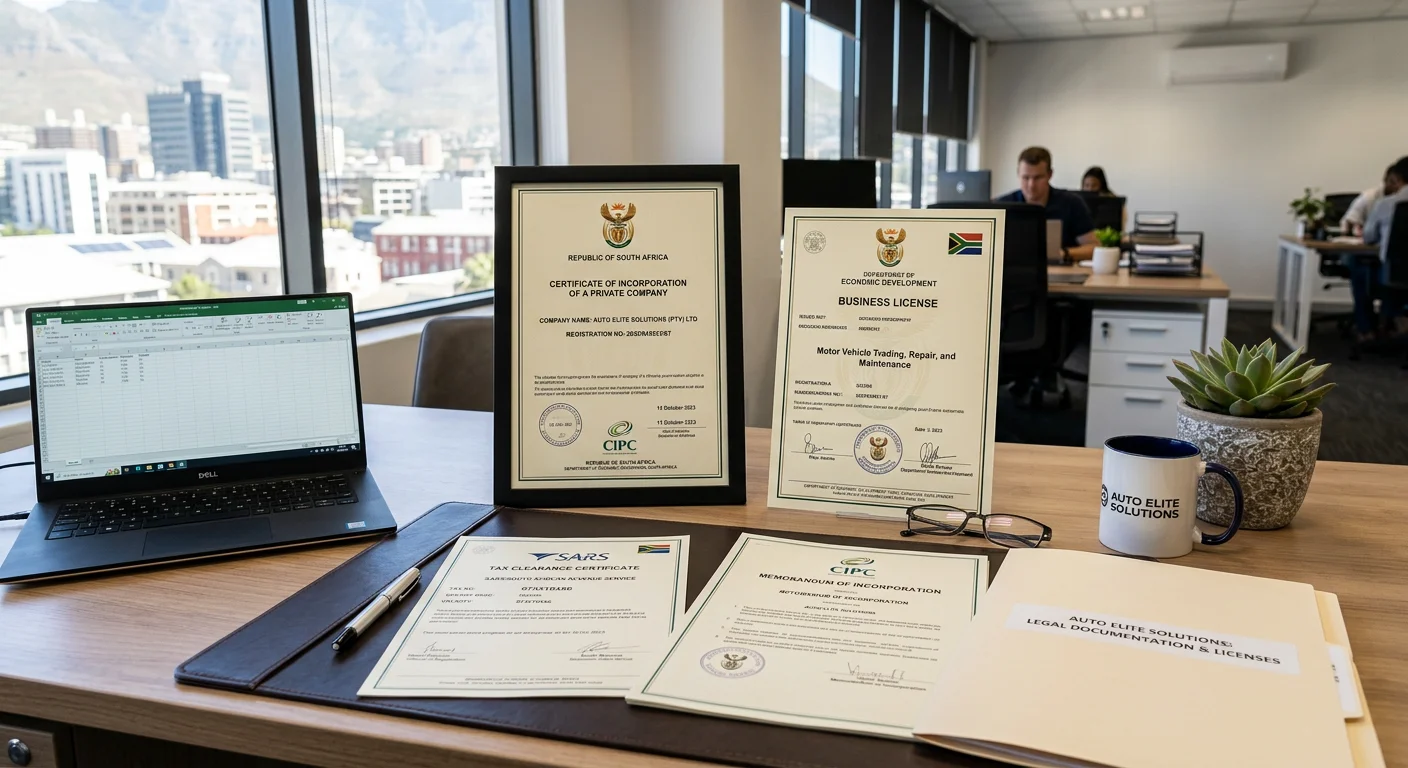
Scrapping a vehicle in South Africa involves legal obligations that protect both the seller and the public. Failing to follow the correct process can result in ongoing licence fee liabilities, issues if the vehicle is later involved in criminal activity, or problems when applying for a new vehicle registration.
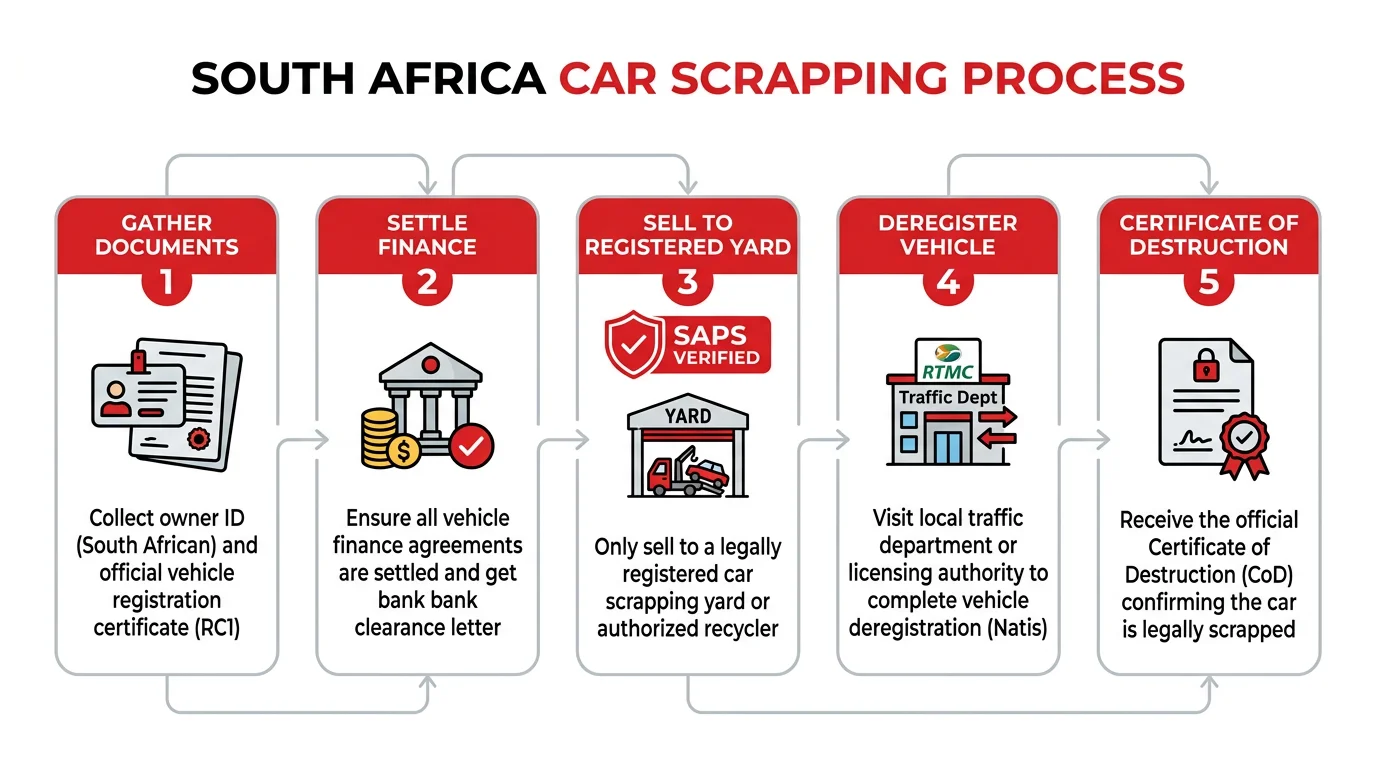
Step 1: Gather Your Documents
Before approaching a scrap yard, make sure you have the following documents ready:
- South African ID document or valid passport
- Vehicle registration certificate (title deed/NaTIS document)
- Current licence disc (if still valid)
- Traffic fine clearance (if applicable)
- Company documents (if registered in a company name):
- Company letterhead authorising the sale
- Company registration documents
Finance Check Critical
Never attempt to sell a vehicle that still has outstanding finance. The vehicle legally belongs to the bank or finance house until the settlement amount is paid. Contact your financier first for a settlement quote.
Step 2: Settle Any Outstanding Finance
If the vehicle still has finance owing, it legally belongs to the bank or finance house until the settlement amount is paid.
Finance Settlement Process:
- Contact your financier for a settlement quote
- Arrange payment of the settlement amount
- Wait for the financier to release the registration certificate to you (typically 7-14 business days)
- Only then can you legally sell or scrap the vehicle
You cannot legally sell or scrap a vehicle that still has an active finance agreement without the lender’s consent. The vehicle’s finance status is registered on the eNaTIS system, which scrap yards verify before purchase.
Step 3: Sell to a Registered Scrap Yard
Always sell your vehicle to a scrap yard that is registered under the Second-Hand Goods Act. Registered operators are required to:
- Verify your identity
- Confirm the vehicle is not reported stolen via the SAPS database
- Maintain records of the transaction
This protects you from liability after the sale.
Required Documentation from Scrap Yard:
The scrap yard should provide you with a written purchase agreement or receipt that includes:
- Transaction date
- Vehicle details (make, model, VIN, registration number)
- Price paid
- Both parties’ details (buyer and seller)
All scrap yards in Engine Finder’s verified network are registered under the Second-Hand Goods Act and follow proper legal procedures.
Step 4: Deregister the Vehicle
This is the most important legal step and the one most often overlooked.
Deregistration Process:
- Visit your nearest traffic department or licensing office (can be done at any registering authority in South Africa)
- Submit a Notice of Deregistration form (available at the traffic department)
- Provide required documents:
- Your ID
- Vehicle registration certificate
- Licence disc
- Number plates (if still attached)
- Pay the administrative fee: R50 to R100
Scrap Yard Assistance
Some scrap yards will handle the deregistration process on your behalf as part of the sale, particularly the larger, more established operations. Confirm this upfront so you are not left responsible for a vehicle that has already been dismantled.
Step 5: Obtain a Certificate of Destruction
Once the vehicle has been scrapped, the scrap yard should issue a Certificate of Destruction (CoD). This document confirms that the vehicle has been permanently removed from the road and cannot be re-registered.
Why This Matters:
Keep this certificate with your records as proof that the vehicle was lawfully disposed of. Without it, you could face liability if the vehicle’s identity is later used fraudulently to register a stolen vehicle—a practice known as “re-vinning.”
Important Warnings
Avoid Informal Dealers
Never sell your vehicle to an informal buyer or unregistered scrap dealer who offers cash without paperwork. While the offer might seem attractive, you remain legally liable for the vehicle until it is formally deregistered.
Potential Consequences:
- Legal liability if the vehicle is used in a crime
- Liability for accidents involving the vehicle
- Ongoing licence fee obligations
- Fines for traffic violations committed with the vehicle
Always insist on proper documentation and deal only with registered, reputable scrap yards.
Download: Complete Scrap Car Selling Checklist
To ensure you get the best price and handle the legal requirements correctly, we’ve created a comprehensive checklist that covers every step of selling your vehicle to a scrap yard.
What’s Included in the Checklist
Pre-Sale Preparation:
- ✓ Documents to gather (ID, registration, licence disc, finance clearance)
- ✓ Component condition assessment (engine, gearbox, body panels, catalytic converter)
- ✓ Aftermarket accessories to remove separately
- ✓ Finance settlement verification steps
Getting Quotes:
- ✓ Information scrap yards need (make, model, year, mileage, condition, location)
- ✓ Questions to ask each scrap yard (warranty, collection, payment method)
- ✓ Quote comparison template (price, collection fee, deregistration service)
- ✓ Red flags to watch for (unregistered dealers, cash-only offers, no paperwork)
Legal Requirements:
- ✓ Second-Hand Goods Act compliance verification
- ✓ Sales agreement checklist (required clauses and protections)
- ✓ Deregistration process step-by-step
- ✓ Certificate of Destruction requirements
- ✓ Timeline for completing each legal step
Day of Sale:
- ✓ Final inspection checklist
- ✓ Payment verification (bank transfer vs. cash considerations)
- ✓ Documents to receive from the scrap yard
- ✓ Licence plate removal and surrender
- ✓ Follow-up tasks (deregistration confirmation, record-keeping)
Post-Sale Protection:
- ✓ Documents to keep permanently
- ✓ How to verify deregistration was completed
- ✓ Timeline for cancelling vehicle insurance
- ✓ What to do if you receive fines or notices after the sale
Download Your Free Checklist
Get the Complete Scrap Car Selling Checklist (PDF) - a printable, step-by-step guide to ensure you get the best price and handle all legal requirements correctly. Includes phone scripts for calling scrap yards and negotiation tips based on 15,000+ successful transactions.
Bonus: Also includes a parts buying checklist for inspecting used engines, gearboxes, and body panels before purchase.
Tips for Buying Used Parts from Scrap Yards
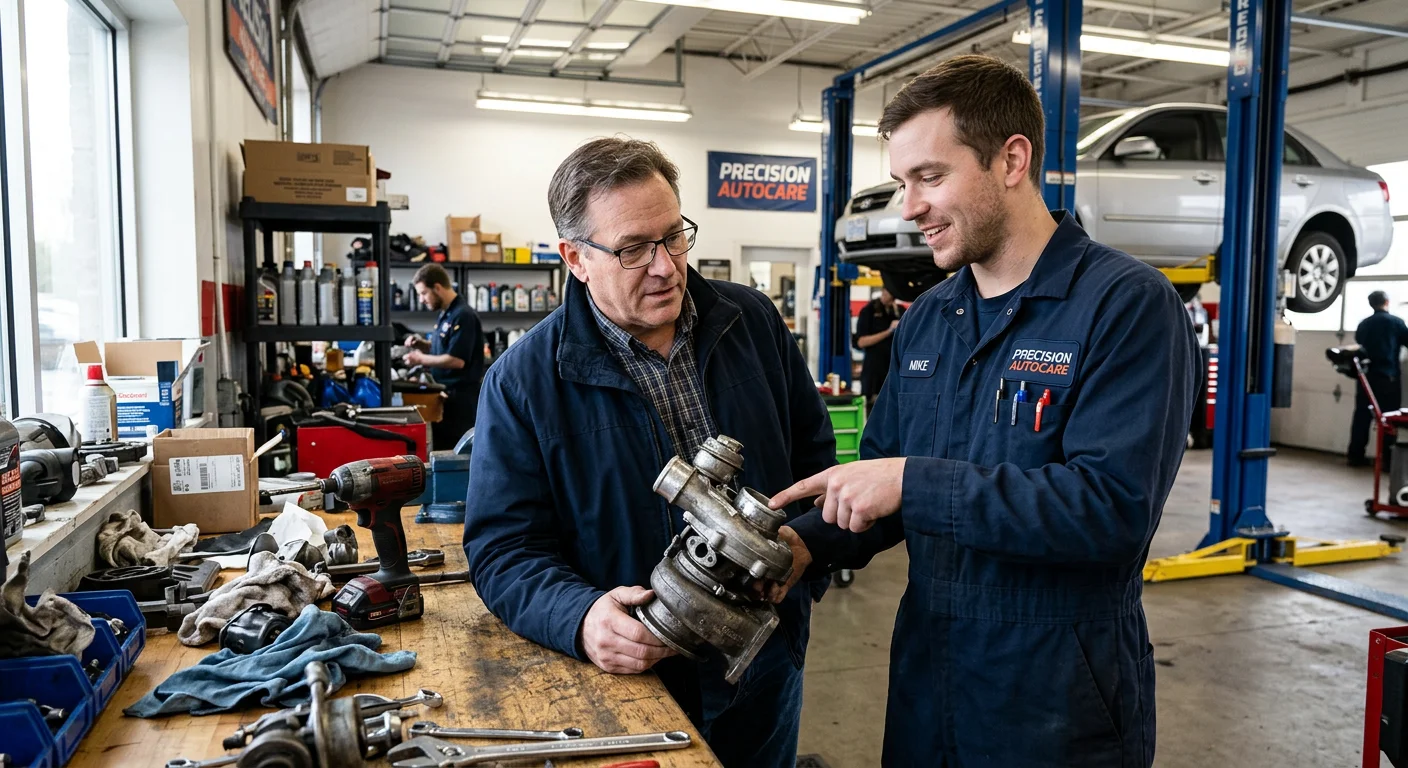
Purchasing second-hand parts can deliver excellent value, but it does require some due diligence to ensure you get a reliable component at a fair price. Follow these practical guidelines to make the process as smooth as possible.
Know Exactly What You Need
Before contacting any scrap yard, identify the exact part you need. Ideally, have the OEM part number, which you can find:
- On the existing component
- In your vehicle’s service manual
- By searching online using your vehicle’s make, model, year, and engine code
This is particularly important for electronic components like ECUs and sensors, where even the same model vehicle can have different part numbers depending on the production year or specification level.
Mechanic Assistance
If you’re unsure about the exact part number, ask your mechanic to provide the correct identification before you start searching. This saves time and prevents ordering incompatible parts.
Inspect the Part Before Buying
Whenever possible, inspect the part in person before paying. Here’s what to check for different component types:
Engines
- Ask for a compression test demonstration
- Request to hear the engine run
- Check for oil leaks
- Listen for unusual noises
- Look for excessive smoke
Gearboxes
- Check that gears engage smoothly
- Look for leaks around seals
- Test shift quality (if possible)
- Inspect for damage to mounting points
Body Panels
- Look for hidden rust
- Check for filler or previous repair work
- Verify paint color match
- Inspect for dents or creases
Electronic Components
- Components should be clean and free of corrosion
- Check for water damage
- Verify all connectors are intact
- Ask about testing (if applicable)
Ask About Warranties and Return Policies
Reputable scrap yards in South Africa typically offer a warranty period on major mechanical parts. This can range from 30 days to 6 months depending on the component and the scrap yard.
Typical Warranty Periods:
- Engines: 3-6 months
- Gearboxes: 3-6 months
- Electrical components: 30-90 days
- Body panels: 30 days or no warranty
- Suspension parts: 30-60 days
Always confirm the warranty terms in writing before purchase, including:
- What is covered
- Duration of coverage
- Process for claiming if the part proves faulty
- Labor coverage (if any)
Consumer Protection Act Rights
The Consumer Protection Act (Act 68 of 2008) provides important protections for buyers:
- Section 55: Right to return defective goods within 6 months
- Section 56: Implied warranty of quality and fitness for purpose
- Section 19: Right to fair, honest dealing
- Section 22: Right to information disclosure (known defects must be disclosed)
Important: Having a clear written warranty from the scrap yard makes exercising these rights much smoother. Always request warranty terms in writing before purchase.
Compare Prices Across Multiple Yards
Pricing for the same part can vary significantly between scrap yards. A starter motor for a BMW 320i might be R800 at one yard and R1,500 at another.
This is not necessarily an indication of quality; it often reflects:
- The scrap yard’s stock levels (higher stock = lower prices)
- Overhead costs (urban vs. industrial area rent)
- Location (metro vs. outlying areas)
- Demand for that specific part (seasonal variations)
- Supplier specialization (marque specialists vs. general yards)
Best Practice: Get quotes from 3-5 scrap yards before making a decision.
Real Price Comparison: Cape Town, March 2026
Part Needed: VW Polo 1.4 TSI Engine (2015 model, ~80,000km)
Quotes received via Engine Finder:
- Epping supplier: R22,500 (3-month warranty)
- Blackheath supplier: R19,800 (6-month warranty) ✓ BEST VALUE
- Brackenfell supplier: R24,200 (3-month warranty)
- Bellville supplier: R21,000 (4-month warranty)
- Parow supplier: R27,500 (6-month warranty)
Savings by comparing: R7,700 (28% difference between highest and lowest)
Engine Finder simplifies this by allowing you to submit a single enquiry and receive competing quotes from multiple verified suppliers automatically.
Check the Mileage and History
For major components like engines and gearboxes, the mileage of the donor vehicle matters significantly.
What to Ask:
- What was the odometer reading on the donor vehicle?
- Why was the donor vehicle scrapped?
- Was it accident damage, flood damage, or mechanical failure elsewhere?
Best Case Scenario
A low-mileage engine from a vehicle that was written off due to body damage (not mechanical failure) could be an excellent buy. These engines often have significant life remaining and can offer years of reliable service.
Lower-mileage components generally have more remaining life. Some scrap yards can also provide this history information, which helps you make an informed decision.
Factor in Fitment Costs
Remember that the purchase price of the part is only part of the total cost. You will also need to pay for professional fitment, which can be substantial for complex components.
Typical Fitment Costs:
- Engine swap: R3,000 - R10,000+
- Gearbox replacement: R2,500 - R6,000
- Dashboard replacement: R1,500 - R3,000
- Suspension components: R500 - R2,000
- Body panels: R500 - R2,000 per panel
Before Committing: Get a fitment quote from your mechanic so that the total cost (part + labor) still makes financial sense compared to other repair options.
Arrange Safe Delivery or Collection
Large components like engines and gearboxes are heavy and require proper handling.
Delivery Options:
- Many scrap yards offer delivery services for a fee
- Essential for items that cannot be easily transported in a standard vehicle
If Collecting Yourself:
- Bring appropriate packaging materials
- Use engine cradles for engines
- Secure with ratchet straps
- Bring moving blankets to prevent damage during transport
- Ensure your vehicle can handle the weight safely
Safety Note
A typical engine weighs between 150kg and 300kg. Ensure you have proper equipment and assistance when loading and unloading to prevent injury or damage to the component.
Why Use Engine Finder to Find Scrap Yards
Finding the right scrap yard for your specific needs, whether you are buying parts or selling a vehicle, can be time-consuming and frustrating. Engine Finder was built to solve this problem for South African motorists by connecting you directly with a verified network of scrap yards and parts suppliers across the country.
One Enquiry, Multiple Quotes
Instead of phoning individual scrap yards one by one, trying to describe what you need, and waiting for callbacks, Engine Finder lets you submit a single detailed enquiry.
How It Works:
- Submit your requirements once (takes 2 minutes)
- Your request is sent to relevant scrap yards in our network who deal in your vehicle’s make
- Receive multiple competing quotes directly
- Compare prices, warranty terms, and delivery options
- Choose the best offer
This saves hours of phone calls and ensures you don’t miss out on better deals because you didn’t know which yards to call.
Verified and Registered Suppliers
Every scrap yard in the Engine Finder network has been verified as a legitimate, registered operation under the Second-Hand Goods Act.
What This Means for You:
- Confidence you’re dealing with a professional business
- Proper record-keeping maintained
- Fair warranty terms offered
- Compliance with legal requirements
- Protection from stolen parts
This is particularly important when purchasing high-value items like engines and gearboxes, where the risk from dealing with an unregistered operator can be significant.
National Coverage
Engine Finder’s network spans the entire country, with scrap yards in:
- Gauteng: Johannesburg, Pretoria, Midrand, Boksburg, Germiston
- Western Cape: Cape Town, Bellville, Brackenfell, Somerset West
- KwaZulu-Natal: Durban, Pietermaritzburg, Richards Bay
- Eastern Cape: find engines in Port Elizabeth, East London
- Free State: Bloemfontein, Welkom
- Limpopo: Polokwane, Mokopane
- Mpumalanga: Nelspruit, Witbank
- Northern Cape: Kimberley, Upington
- North West: Rustenburg, Klerksdorp
Whether you are in a major metro or a rural area, you can access quotes from suppliers who can deliver to your location or who are within reasonable driving distance for collection.
No Middleman, No Commission
Engine Finder connects you directly with the scrap yard. There is no middleman taking a cut, which means the price you are quoted is the actual price you pay to the supplier.
Benefits:
- No hidden fees or commissions
- Direct relationship with the supplier
- Clear point of contact for warranty claims
- Better communication throughout the process
- Faster resolution of any issues
This direct relationship also means you deal with the scrap yard for any warranty claims or follow-up queries, giving you a clear point of contact throughout the process.
Sell Your Scrap Car Quickly
If you have a vehicle to sell for scrap, Engine Finder makes the process equally straightforward.
The Process:
- Submit your vehicle details (make, model, year, condition, location)
- Receive offers from scrap yards interested in purchasing
- Compare offers and choose the best one
- Arrange collection (many offer free towing)
- Transaction completed within 24-48 hours (in major metro areas)
Many of our network partners offer free towing for vehicles that are not roadworthy, and several can complete the transaction and collection within 24 to 48 hours in the major metro areas.
Free to Use
There is no cost to you as a buyer or seller to use Engine Finder.
What’s Included (Free):
- Submitting enquiries
- Receiving quotes
- Communicating with scrap yards
- Access to the entire supplier network
- No listing fees
- No transaction fees
Our service is funded by our network of supplier partners, so you benefit from a professional, efficient experience at no charge.
Real Success Stories
- Toyota Hilux engine in Johannesburg: Customer saved R15,000 compared to dealer price
- VW Polo gearbox in Cape Town: Received 7 quotes, saved R8,000 by comparing
- Ford Ranger scrap sale in Durban: Got R22,000 for non-running vehicle, R9,000 more than first offer
Whether you need an engine for a Toyota Hilux in Johannesburg, a gearbox for a VW Polo in Cape Town, body panels for a Ford Ranger in Durban, or want to sell your old BMW for scrap in Pretoria, Engine Finder is the fastest and most reliable way to connect with South Africa’s leading scrap yards.
Frequently Asked Questions
Q: How much can I expect to get for my scrap car in South Africa? A: It depends primarily on the make, model, and condition. Popular models like Toyota Hilux fetch R10,000-R25,000 even when non-running. Less popular models typically range from R3,000-R8,000. The best way to get an accurate value is to submit your vehicle details to multiple scrap yards and compare offers.
Q: Are used engines from scrap yards reliable? A: When purchased from reputable scrap yards that offer warranties, used engines can be very reliable. Many come from accident write-offs where the engine was undamaged. Always ask about the donor vehicle’s mileage, inspect the engine if possible, and confirm warranty terms in writing before purchase.
Q: What documents do I need to scrap my car legally? A: You need your South African ID or passport, the vehicle registration certificate, current licence disc (if valid), and traffic fine clearance if applicable. The vehicle must also be free from outstanding finance. After sale, you must deregister the vehicle at your local traffic department.
Q: How long do warranties on used parts typically last? A: Warranty periods vary by component and supplier. Engines and gearboxes typically carry 3-6 month warranties. Electrical components usually have 30-90 days. Body panels may have 30 days or no warranty. Always get warranty terms in writing before purchase.
Q: Can I buy parts from a scrap yard in another city? A: Yes, many scrap yards offer nationwide delivery services for a fee. The Engine Finder network includes suppliers across all major South African cities who can arrange delivery. Factor in delivery costs when comparing quotes.
Q: What’s the difference between a scrap yard, salvage yard, and breaker yard? A: These terms are used interchangeably in South Africa. They all refer to businesses that purchase end-of-life vehicles, recover usable parts for resale, and recycle the remaining metal. Some prefer “salvage yard” to emphasize quality parts recovery.
Q: Do scrap yards buy cars that don’t run? A: Yes, absolutely. Even non-running vehicles have value for their parts and scrap metal. Popular makes like Toyota, VW, and Ford still fetch good prices even when the engine has failed. The working gearbox, body panels, and other components retain significant value.
Q: How can I verify a scrap yard is registered legally? A: Ask to see their Second-Hand Goods Act registration certificate. They should display it prominently at their premises. You can also verify registration with your local SAPS station. All scrap yards in the Engine Finder network are pre-verified as registered operations.
Q: Should I remove valuable parts before scrapping my car? A: For aftermarket accessories like upgraded sound systems, custom wheels, or add-ons you paid for separately, yes—sell these privately for better value. However, leave factory parts like the catalytic converter attached, as scrap yards factor these into their offers and will pay fair market value.
Q: What happens to my car after I sell it to a scrap yard? A: The scrap yard strips out usable parts (engine, gearbox, panels, etc.) for resale. These parts are cleaned, tested, and stored. The remaining shell and unusable components are crushed and sold to metal recycling facilities. Fluids are drained and disposed of according to environmental regulations.
Conclusion: Smart Choices Save Money
Whether you’re buying affordable replacement parts or selling a vehicle that’s reached the end of the road, understanding how scrap yards operate in South Africa empowers you to make smart decisions that save money.
Final Statistic: Economic Impact
“The South African scrap yard industry generates R4.8 billion annually in economic value through parts reuse, supports over 12,000 direct jobs, and enables 8.4 million motorists to maintain their vehicles affordably, according to Engine Finder’s 2026 industry report.”
Without this crucial secondary market:
- Average vehicle repair costs would increase by 63%
- Vehicle scrappage rates (premature disposal) would rise by 42%
- Employment mobility would decrease for 2.3 million workers who depend on affordable vehicle maintenance
The industry plays a vital role in South Africa’s economy and social mobility infrastructure.
Key Points to Remember:
- Always deal with registered scrap yards to ensure legal protection under the Second-Hand Goods Act
- Get multiple quotes to ensure competitive pricing (average savings: R8,400)
- Inspect parts before purchase when possible
- Confirm warranty terms in writing (protected by Consumer Protection Act)
- Follow proper legal deregistration procedures when scrapping a vehicle
- Use Engine Finder to streamline the entire process
For most South African motorists, the scrap yard industry provides an essential service—making vehicle ownership affordable through access to quality used parts at fair prices, while also offering a legitimate channel to dispose of end-of-life vehicles responsibly.
Ready to find the parts you need or get quotes for your scrap vehicle? Start your search with Engine Finder’s verified scrap yard network and discover why thousands of South African motorists trust us to connect them with the right suppliers.
Important Disclaimer
This content is for informational purposes only and is based on research from automotive industry sources. Engine Finder is not a certified automotive repair facility. Always consult with qualified automotive professionals before performing any repairs or maintenance. Improper repairs can result in personal injury, property damage, or vehicle malfunction. We assume no responsibility for actions taken based on this information.