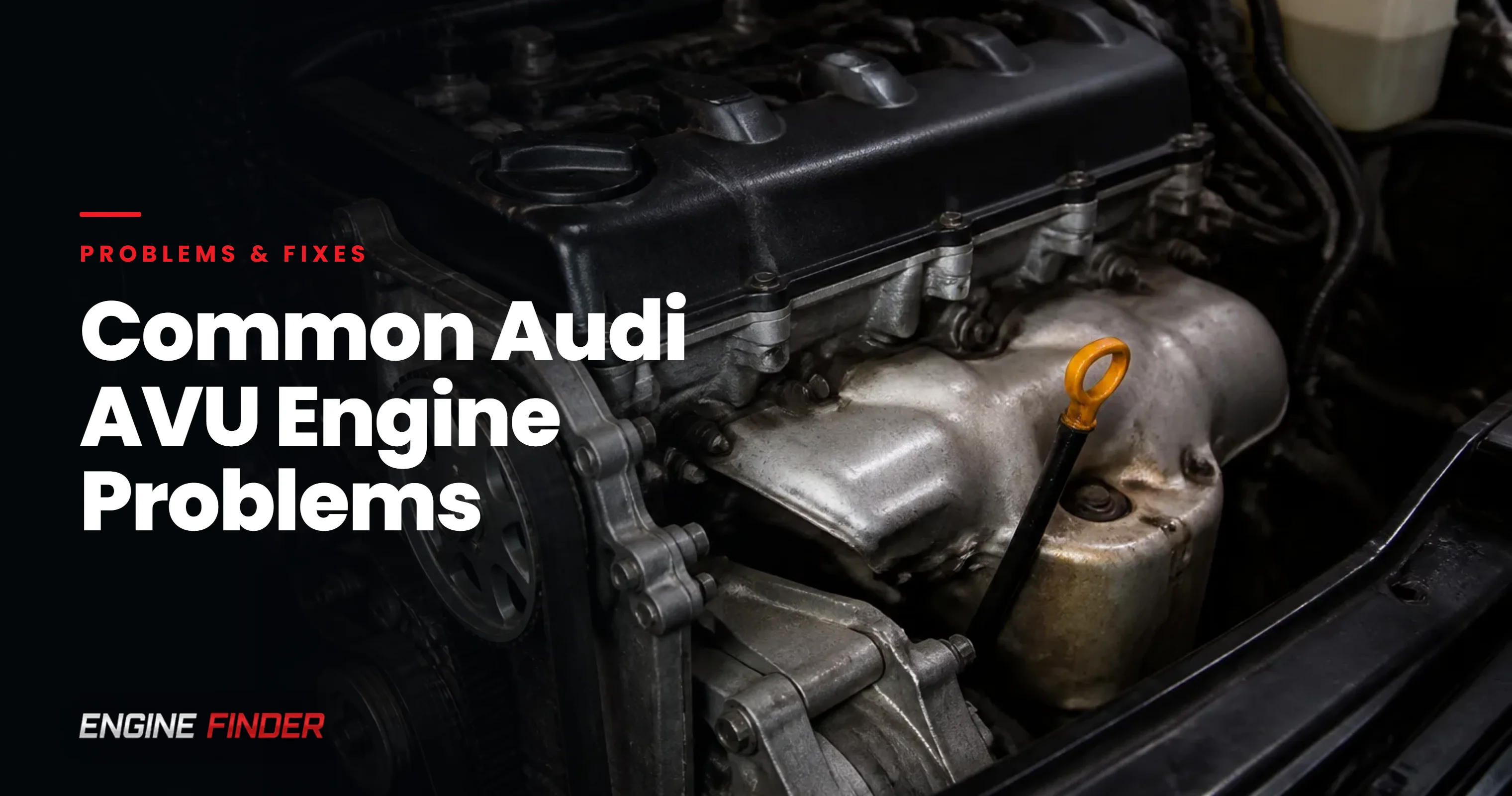
Common Audi AVU Engine Problems: Expert Solutions & Costs

Key Takeaways
| Problem | Main Symptoms | Possible Causes |
|---|---|---|
| Timing Belt Failure Risk | Engine rattling, loss of power, no start | Belt wear, tensioner failure, water pump issues |
| Oil Consumption Issues | Blue smoke, frequent oil top-ups, low oil warnings | Worn piston rings, valve stem seals, head gasket |
| Ignition System Failures | Misfires, rough idle, poor acceleration | Coil pack failure, worn spark plugs, vacuum leaks |
| PCV System Problems | Oil leaks, rough idle, increased emissions | Cracked hoses, blocked valves, breather failures |
| Cooling System Malfunctions | Overheating, erratic temperature, poor starts | Sensor failures, thermostat issues, head gasket |
The Audi AVU engine is a 1.6-liter naturally aspirated petrol engine that powered the Audi A3 8L from 2000 to 2003. As part of Volkswagen’s EA113 engine family, this reliable SOHC 8-valve powerplant delivers modest but dependable performance with 102 horsepower. Since it belongs to the VW Group family, compatible parts can sometimes be found through used VW engines listings as well. While generally robust and capable of reaching 350,000+ kilometers with proper maintenance, the AVU engine has developed certain characteristic issues that owners should understand for optimal longevity and performance.
Audi AVU Engine Specifications
| Specification | Details |
|---|---|
| Engine Code | AVU |
| Engine Family | EA113 (VW Group) |
| Displacement | 1,595cc (1.6L) |
| Configuration | Inline-4, SOHC, 8-valve |
| Power Output | 75 kW (102 hp @ 5,600 rpm) |
| Torque | 148 Nm @ 3,800 rpm |
| Compression Ratio | 10.5:1 |
| Fuel System | Multi-point Injection |
| Application | Audi A3 8L, VW Golf IV, VW Bora, Skoda Octavia I |
| Production Years | 2000 – 2003 (A3 8L / Golf IV); engine unit produced 2000 – 2002 |
1. Timing Belt Failure Risk
The AVU engine uses a timing belt system that requires regular replacement to prevent catastrophic engine damage, as this is an interference engine design.
Causes
- Normal timing belt wear over time
- Timing belt tensioner bearing failure
- Water pump failure affecting belt alignment
- Oil contamination from leaking seals
- Exceeding recommended replacement intervals
Symptoms
- High-pitched squealing from engine front
- Metallic rattling during startup
- Sudden complete loss of engine power
- Engine will not start after belt failure
- Visible belt wear or fraying on inspection
Solution
- Complete timing belt kit replacement: R8,500 - R15,000
- Water pump replacement (recommended): R3,500 - R6,000
- Tensioner and idler pulley service: R2,500 - R4,000
- Front crankshaft seal replacement: R1,500 - R3,000
DIY Difficulty / Hours
- Timing belt replacement: High difficulty / 6-10 hours
- Requires proper timing tools and engine positioning
Critical Warning
AVU engines are interference engines. Timing belt failure will cause valve-to-piston contact, resulting in bent valves, damaged pistons, and potential complete engine rebuild requirements. Source replacement parts from Audi parts from stripped vehicles suppliers or Audi breakers near you.
2. Oil Consumption Issues
Higher mileage AVU engines often develop increased oil consumption due to worn internal components, particularly piston rings and valve stem seals.
Causes
- Worn piston rings allowing oil into combustion chambers
- Deteriorated valve stem seals causing oil burning
- Cylinder head gasket micro-leaks
- PCV system malfunction increasing crankcase pressure
- Extended oil change intervals accelerating wear
Symptoms
- Blue smoke from exhaust during acceleration
- Frequent need for oil top-ups between services
- Oil level warning lights appearing regularly
- Spark plug fouling with oil deposits
- Excessive crankcase pressure buildup
Solution
- Piston ring replacement: R25,000 - R35,000
- Valve stem seal replacement: R12,000 - R18,000
- Head gasket replacement: R15,000 - R25,000
- PCV system overhaul: R3,000 - R6,000
DIY Difficulty / Hours
- Valve stem seals: High difficulty / 8-12 hours
- Piston rings: Professional only / 20-30 hours
Maintenance Tip
Monitor oil consumption carefully. Consumption of more than 1 liter per 2,000km indicates internal wear requiring attention before further damage occurs.
3. Ignition System Failures
The AVU engine’s ignition system, particularly the coil pack and spark plugs, requires regular attention to maintain smooth operation and prevent misfires.
Causes
- Ignition coil pack internal component failure
- Carbon fouling on spark plug electrodes
- Vacuum leaks affecting air-fuel mixture
- Worn spark plug gap affecting combustion
- Poor electrical connections at coil pack
Symptoms
- Engine misfiring during acceleration
- Rough idle and hesitation
- Reduced fuel economy and power
- Engine management warning lights
- Difficulty starting in cold conditions
Solution
- Ignition coil pack replacement: R3,500 - R6,000
- Spark plug set replacement: R800 - R1,500
- Vacuum leak diagnosis and repair: R2,000 - R4,500
- Intake manifold gasket replacement: R2,500 - R4,000
DIY Difficulty / Hours
- Coil pack replacement: Medium difficulty / 2-3 hours
- Spark plug replacement: Easy / 1-2 hours
Technical Note
The AVU engine uses a coil pack design rather than individual coils. When one cylinder misfires, the entire pack typically requires replacement for reliable operation.
4. PCV System Problems
The AVU’s Positive Crankcase Ventilation (PCV) system is a frequent trouble spot at higher mileages. Cracked or blocked breather hoses raise crankcase pressure, forcing oil past gaskets and seals and degrading combustion quality.
Causes
- Cracked or brittle PCV breather hoses (common after 150,000 km)
- Blocked or seized PCV valve preventing pressure relief
- Oil sludge accumulation from extended service intervals
- Deteriorated intake manifold breather connections
- Diaphragm failure in the oil separator
Symptoms
- Oily residue inside air intake hose or throttle body
- Rough idle and increased oil consumption
- Blue-grey smoke on overrun or deceleration
- Oil leaks at rocker cover or crankshaft seals
- Vacuum-induced lean misfire fault codes (P0171)
Solution
- PCV breather hose set replacement: R1,500 - R3,000
- PCV valve replacement: R800 - R1,800
- Oil separator service: R1,200 - R2,500
- Rocker cover gasket replacement: R2,000 - R4,000
DIY Difficulty / Hours
- Breather hose inspection and replacement: Easy-Medium / 1-2 hours
- Full PCV overhaul: Medium difficulty / 2-4 hours
Maintenance Tip
Inspect PCV breather hoses at every oil change. Replacing the full hose set every 100,000 km is cheap insurance against oil leaks and rough idle on high-mileage AVU engines.
5. Cooling System Malfunctions
The AVU’s cooling system is a common maintenance area, with the coolant temperature sensor, thermostat, and associated hoses known to cause erratic temperature readings and overheating if neglected.
Causes
- Faulty coolant temperature sensor (G62) sending incorrect readings to ECU
- Thermostat stuck open (engine runs cold) or closed (overheating)
- Coolant hose perishing and weeping, leading to gradual coolant loss
- Radiator corrosion or blockage reducing heat dissipation
- Head gasket micro-leaks on high-mileage or overheated units
Symptoms
- Temperature gauge fluctuating or sitting below normal operating range
- Engine overheating warning light
- Poor cabin heater output
- Coolant loss without visible external leak
- White exhaust smoke or sweet smell indicating combustion-side coolant ingress
Solution
- Coolant temperature sensor replacement: R800 - R1,800
- Thermostat and housing replacement: R2,500 - R5,000
- Coolant hose set replacement: R1,500 - R3,500
- Radiator replacement: R5,000 - R10,000
- Head gasket replacement: R15,000 - R25,000
DIY Difficulty / Hours
- Temperature sensor replacement: Easy / 1 hour
- Thermostat replacement: Easy-Medium / 1-2 hours
- Head gasket: Professional only / 15-20 hours
Important Warning
Never continue driving an overheating AVU engine. A single overheat event can warp the aluminium cylinder head, turning a R2,500 thermostat job into a R20,000+ head gasket repair.
Preventative Maintenance Tips
Regular Service Schedule
| Service Type | Interval | Critical Components |
|---|---|---|
| Oil and Filter Change | Every 15,000km or 12 months | 5W-40 oil meeting VW 502.00 spec |
| Spark Plug Replacement | Every 30,000km | OEM-spec NGK or Bosch plugs |
| Air Filter Service | Every 40,000km | Clean intake system thoroughly |
| Timing Belt + Tensioner Kit | Every 90,000km | Replace water pump at same time |
| PCV Breather Hose Inspection | Every 60,000km or at timing belt service | Replace if any cracking or oil residue |
Critical Maintenance Items
- Premium Oil: Use only VW 502.00 specification oil (5W-40), never exceed service intervals
- Quality Fuel: Always use premium unleaded petrol (95 or 98 RON) from reputable suppliers
- Early Diagnosis: Address unusual noises, warning lights, or performance changes immediately
- Proper Warm-up: Allow engine to reach operating temperature before heavy loads
FAQ
How reliable is the CAS engine compared to other 3.0 TDI variants?
The CAS engine is generally reliable but represents a transitional period in 3.0 TDI development. With proper maintenance, it can achieve 400,000+ km, though timing chain and fuel system attention is crucial.
What’s the most expensive repair to expect on a CAS engine?
Complete timing chain replacement is typically the most expensive repair (R45,000-R65,000), followed by high-pressure fuel pump replacement and turbocharger rebuild.
Are there any known recalls for CAS engines?
Some CAS variants have been subject to technical service bulletins for timing chain tensioner updates and fuel pump improvements. Check with an Audi dealer for applicable campaigns.
How can I prevent timing chain problems?
Use high-quality oil, maintain strict service intervals (max 15,000km), monitor oil levels regularly, and address any unusual noises immediately.
Is the CAS engine affected by emissions regulations?
The CAS engine meets Euro 5 emissions standards but may face restrictions in some low-emission zones. Ensure all emission control systems are functioning properly.
Watch: 3.0 TDI Engine Analysis and Repair
Detailed timing chain replacement and root cause analysis by Just Grow Cars
Comprehensive overview of 3.0 TDI common faults and preventative maintenance
Conclusion
The Audi CAS engine represents sophisticated diesel technology that delivers excellent performance when properly maintained. While it has specific vulnerability points—particularly the timing chain system and fuel injection components—understanding these issues allows owners to maintain their vehicles proactively and address problems before they become catastrophic.
Success with the CAS engine requires strict adherence to maintenance schedules, use of premium consumables, and immediate attention to any unusual symptoms. For South African owners experiencing CAS engine problems, Engine Finder provides access to quality Audi engines for sale and specialist technical support throughout the country.
The key to CAS longevity lies in respecting its sophisticated engineering while being vigilant about its known weak points, particularly timing chain maintenance and fuel system care. Owners of other Audi TDI engines may also want to read our CAY engine problems guide for comparison.
References and Further Reading
Official Technical Documentation
- Audi Self-Study Program SSP 350: The 3.0L V6 TDI Engine
- Audi Technical Service Bulletin MC-10072887-0699
Advanced Technical Resources
Community Resources
Related Articles
Explore more insights on similar topics
Ford Focus Gearbox Replacement Cost in South Africa (2026 Guide)
Ford Focus gearbox replacement costs R6,000–R18,000 for a manual and R18,000–R38,000 for the PowerShift DCT in South Africa. Full price breakdown by variant, known DPS6 problems, and how to save.
Nissan NP200 Gearbox Problems: JR5 Manual, Clutch & Costs (SA Guide)
Nissan NP200 gearbox problems explained — the Renault JR5/JH3 manual, crunchy shifts, 5th-gear whine, soft-clutch cylinder faults, and what a used or recon NP200 gearbox costs in SA.
Manual Gearbox Replacement Cost in South Africa (2026 Guide)
How much does manual gearbox replacement cost in South Africa? Budget exchange from R4,000 fitted; heavy-duty bakkie installs reach R32,000+. Real SA prices by model, gearbox codes, labour hours, and a worth-it decision framework.
Important Disclaimer
This content is for informational purposes only and is based on research from automotive industry sources. Engine Finder is not a certified automotive repair facility. Always consult with qualified automotive professionals before performing any repairs or maintenance. Improper repairs can result in personal injury, property damage, or vehicle malfunction. We assume no responsibility for actions taken based on this information.