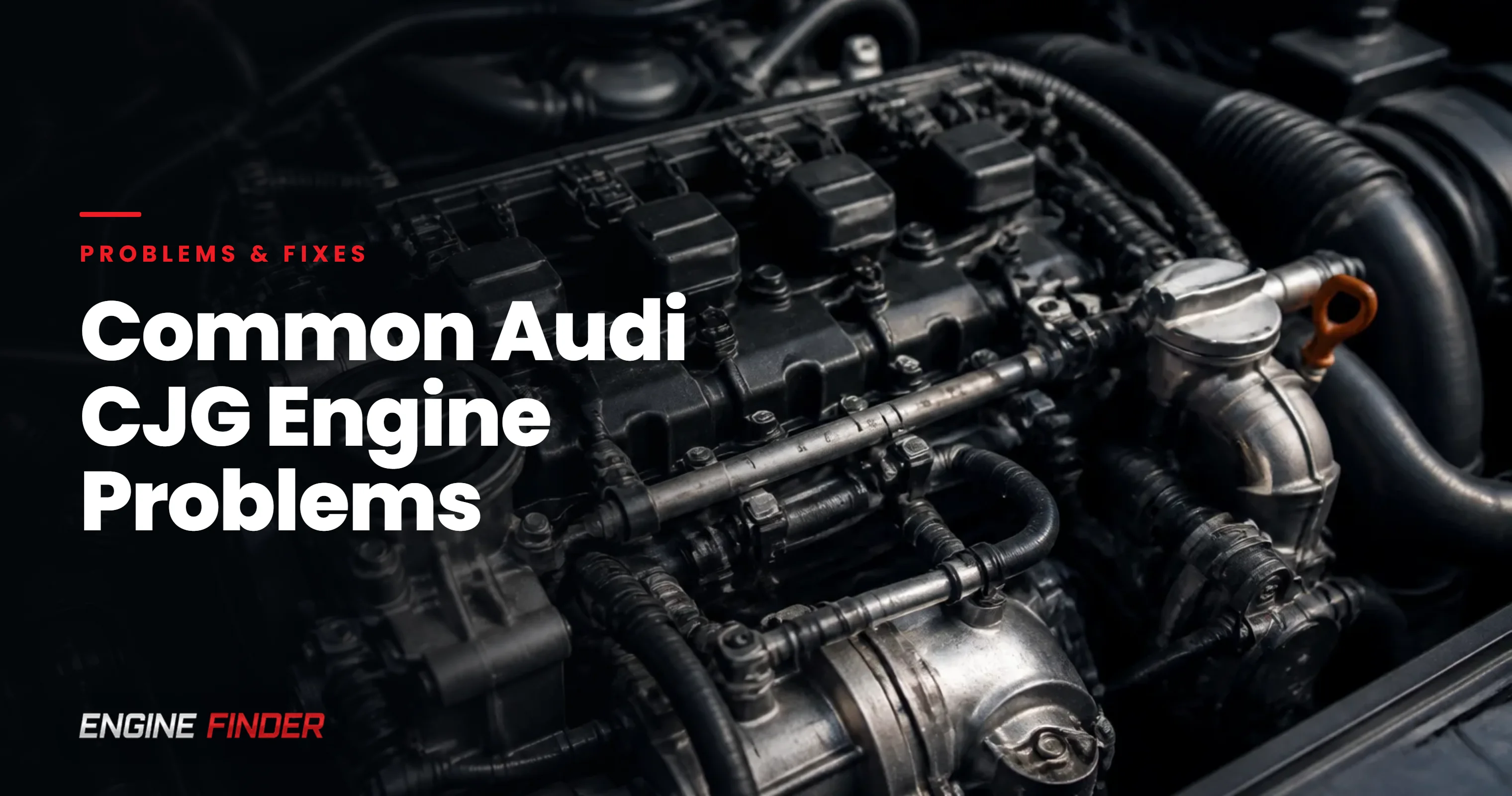
Common Audi CJG Engine Problems: Expert Solutions & Costs

Key Takeaways
| Problem | Main Symptoms | Possible Causes |
|---|---|---|
| Timing Chain Stretch | Rattling on startup, timing errors, rough running | Chain wear, tensioner failure, oil quality |
| Oil/Coolant Leaks | Fluid puddles, low levels, steam | Gasket failures, plastic component cracking |
| Turbocharger Issues | Power loss, whistling sounds, blue smoke | VTG mechanism failure, bearing wear, oil starvation |
| Injector and Fuel System Wear | Rough running, hard starting, diesel knock | Piezo injector wear, poor fuel, blocked filter |
| EGR System Problems | Rough idle, black smoke, limp mode | Carbon buildup, valve sticking, cooler failure |
The Audi CJG engine is a 3.0-litre V6 TDI diesel engine from the first generation of Audi’s highly successful V6 TDI family. It was fitted to the first-generation Audi Q7 (4L) from late 2007 to early 2011, where it produced 176 kW. This common rail diesel unit delivers strong torque but comes with specific maintenance challenges typical of complex modern diesel engines. If repair costs become prohibitive, sourcing a replacement Audi 3.0 TDI engine is often more cost-effective than a full rebuild. Audi’s smaller CJC 2.0 TDI engine shares several common diesel issues, particularly around fuel injection and DPF systems.
Audi CJG Engine Specifications
| Specification | Details |
|---|---|
| Engine Code | CJG |
| Displacement | 3.0L (2,967cc) |
| Configuration | 90° V6, DOHC |
| Fuel System | Common Rail Direct Injection (Piezo injectors) |
| Turbocharging | Single turbocharger with Variable Turbine Geometry (VTG) |
| Power Output | 176 kW (239 hp) @ 4000 rpm |
| Torque Output | 550 Nm (405 lb-ft) @ 1750-2750 rpm |
| Production Years | 2007-2011 |
| Applications | Audi Q7 (4L, first generation) |
1. Timing Chain Stretch
Causes
- Extended oil change intervals leading to chain wear
- Weak hydraulic chain tensioners on this first-generation V6 TDI
- Poor oil quality causing accelerated wear
- High mileage operation with insufficient maintenance
- Engine overheating causing chain expansion
Symptoms
- Metallic rattling noise on cold startup
- Cam timing error codes (P0016, P0017, P0018, P0019)
- Rough idle and reduced engine performance
- Check engine light activation
- In severe cases, complete timing failure
Solution
- Complete timing chain kit replacement: R35,000 - R50,000
- Upgraded chain tensioner and guides: R8,000 - R12,000
- Oil pump chain replacement: R15,000 - R20,000
- Preventive replacement after 300,000 km: R45,000 - R60,000
DIY Difficulty / Hours
- Professional only: Very high difficulty / 12-16 hours
- Requires engine removal or significant disassembly
Critical Warning
Chain failure can cause catastrophic engine damage including bent valves and piston damage. Address that cold-start rattle immediately — the timing chain sits at the rear of the engine (gearbox side), so the job usually means dropping the engine or gearbox and the labour is significant. If damage has already occurred, compare replacement costs against a full engine overhaul expenses.
2. Oil and Coolant Leaks
Causes
- Multiple gasket failures between cylinder heads
- Cheap plastic coolant components cracking
- Oil cooler gasket deterioration
- Valve cover gasket aging
- Thermal cycling causing seal degradation
Symptoms
- Oil puddles under vehicle, especially at front
- Coolant loss without external visible leaks
- Steam from engine bay during operation
- Low fluid level warnings
- Sweet coolant smell in cabin
Solution
- Valve cover gasket replacement: R8,000 - R12,000 per side
- Oil cooler gasket kit: R15,000 - R25,000
- Plastic coolant flange replacement: R5,000 - R8,000
- Complete gasket refresh: R45,000 - R65,000
- Front engine cover seal replacement: R20,000 - R30,000
DIY Difficulty / Hours
- Valve covers: Medium difficulty / 4-6 hours
- Oil cooler: Professional recommended / 6-8 hours
- Complete refresh: Professional only / 15-20 hours
Prevention Strategy
Address leaks promptly and replace plastic coolant components preventively around 150,000 km to avoid cascading failures and expensive repairs.
3. Turbocharger Issues
Causes
- Variable Turbine Geometry (VTG) mechanism carbon buildup
- Bearing wear from oil starvation or contamination
- Actuator motor failure affecting boost control
- Oil feed line blockages
- Excessive heat cycling
Symptoms
- Significant power loss and slow acceleration
- Whistling or whining sounds from engine bay
- Blue or black smoke from exhaust
- Turbocharger error codes (P0234, P0299)
- Oil leaks around turbo housing
Solution
- VTG mechanism cleaning: R8,000 - R12,000
- Turbocharger rebuild: R25,000 - R35,000
- Complete turbo replacement: R40,000 - R60,000
- Actuator motor replacement: R12,000 - R18,000
DIY Difficulty / Hours
- VTG cleaning: Professional recommended / 4-6 hours
- Turbo replacement: Professional only / 8-12 hours
Maintenance Tip
Regular highway driving and quality oil changes help prevent VTG carbon buildup. Avoid short trips and allow proper engine cool-down after hard driving.
4. Injector and Fuel System Wear
Causes
- Piezo injector wear at high mileage
- Poor or contaminated diesel causing internal damage
- Water contamination in the fuel system
- Extended service intervals
- Blocked fuel filter starving the pump
Symptoms
- Rough running, misfire or knocking from a worn injector
- Hard starting or extended cranking
- Fuel pressure and injector fault codes
- Reduced power and higher smoke
- Increased diesel knock, especially when cold
Solution
- Single piezo injector replacement: R8,000 - R15,000
- Full set of injectors: R45,000 - R70,000
- High pressure pump (Bosch CP3) replacement: R20,000 - R35,000
- Fuel rail and lines replacement: R25,000 - R35,000
- Fuel filter service: R1,500 - R3,000
DIY Difficulty / Hours
- Injector R&R: High difficulty / 4-8 hours
- Pump replacement: Professional recommended / 6-10 hours
Critical Warning
The first-generation CJG uses the robust Bosch CP3 pump, not the later CP4 that self-destructs and contaminates the whole fuel system — so blanket “replace every injector” horror stories from newer 3.0 TDIs do not apply here. Still, protect the system: use clean, good-quality diesel, change the fuel filter on schedule, and never run the tank near empty.
5. EGR System Problems
Causes
- Carbon buildup in EGR valve and cooler
- EGR cooler failure due to thermal stress
- Vacuum actuator problems
- Intake manifold carbon contamination
- Poor combustion quality increasing soot production
Symptoms
- Rough idle and uneven engine running
- Black smoke from exhaust under acceleration
- EGR error codes (P0401, P0402, P0403)
- Engine entering limp mode
- Reduced power and poor fuel economy
Solution
- EGR valve cleaning: R3,000 - R5,000
- EGR valve replacement: R8,000 - R15,000
- EGR cooler replacement: R20,000 - R30,000
- Complete EGR module: R35,000 - R50,000
- Intake manifold cleaning: R5,000 - R8,000
DIY Difficulty / Hours
- EGR valve cleaning: Medium difficulty / 2-3 hours
- EGR valve replacement: High difficulty / 4-6 hours
- Complete module: Professional recommended / 6-10 hours
Prevention Strategy
Regular EGR cleaning every 80,000 km and quality diesel fuel with cleaning additives help prevent carbon buildup and extend system life.
YouTube Videos
For visual guidance on CJG engine maintenance and repairs, check out these helpful videos:
- 3.0 TDI Engine Overview and Common Problems - Comprehensive guide to the CJG engine family
- Timing Chain Replacement on 3.0 TDI - Step-by-step timing chain service procedure
FAQ
Q: How reliable is the CJG 3.0 TDI engine?
A: With proper maintenance, the CJG can be very reliable and reach 500,000+ km. However, it requires attention to timing chains, oil/coolant leaks, and turbo maintenance.
Q: What’s the recommended oil change interval for CJG engines?
A: Despite manufacturer recommendations of 15,000-20,000 km, experienced mechanics recommend 10,000 km intervals, especially for timing chain longevity.
Q: What’s the CJG engine’s biggest weak point?
A: The rear timing chain and its hydraulic tensioner. A metallic rattle for a few seconds on cold start is the classic warning sign — act on it early, because a snapped chain can wreck the engine and the chain’s location at the gearbox end of the block makes replacement a big, labour-heavy job. Its successor, the CRC 3.0 TDI (2011 onward), shares some of the same failure modes if you’re researching across generations.
Q: How much does major CJG engine repair cost?
A: Major repairs range from around R35,000-R50,000 for a full timing chain kit to R45,000-R70,000 for a complete set of injectors. Regular maintenance is far more cost-effective, and a good used engine is often cheaper than a big repair.
Q: Should I buy a high-mileage CJG engine vehicle?
A: High-mileage CJG vehicles can be good value if maintenance records show proper timing chain and oil/coolant system care. Budget for preventive maintenance.
Summary
The Audi CJG 3.0 TDI is a sophisticated and powerful diesel engine that can provide excellent service when properly maintained. Key focus areas include timing chain health, managing the numerous potential leak points, and maintaining the complex turbocharger and EGR systems. While repair costs can be substantial, preventive maintenance and quality fluids significantly extend engine life. Source affordable used parts from Audi breakers suppliers or find complete assemblies at Audi dismantlers across South Africa. Because the CJG shares its architecture with VW Group platforms, second-hand VW engines can also be a useful cross-reference when sourcing ancillary parts.
References
- Audi Technical Service Bulletins for 3.0 TDI engines
- VW/Audi Self-Study Programme SSP 350 – The 3.0 litre V6 TDI engine (first generation)
- ProxyParts engine code database
- Q7 / Touareg owner forums and independent diesel specialists on 3.0 TDI timing chain wear
For expert Audi CJG engine parts and repairs, contact our certified mechanics for professional diagnostics and solutions.
Related Articles
Explore more insights on similar topics
Ford Focus Gearbox Replacement Cost in South Africa (2026 Guide)
Ford Focus gearbox replacement costs R6,000–R18,000 for a manual and R18,000–R38,000 for the PowerShift DCT in South Africa. Full price breakdown by variant, known DPS6 problems, and how to save.
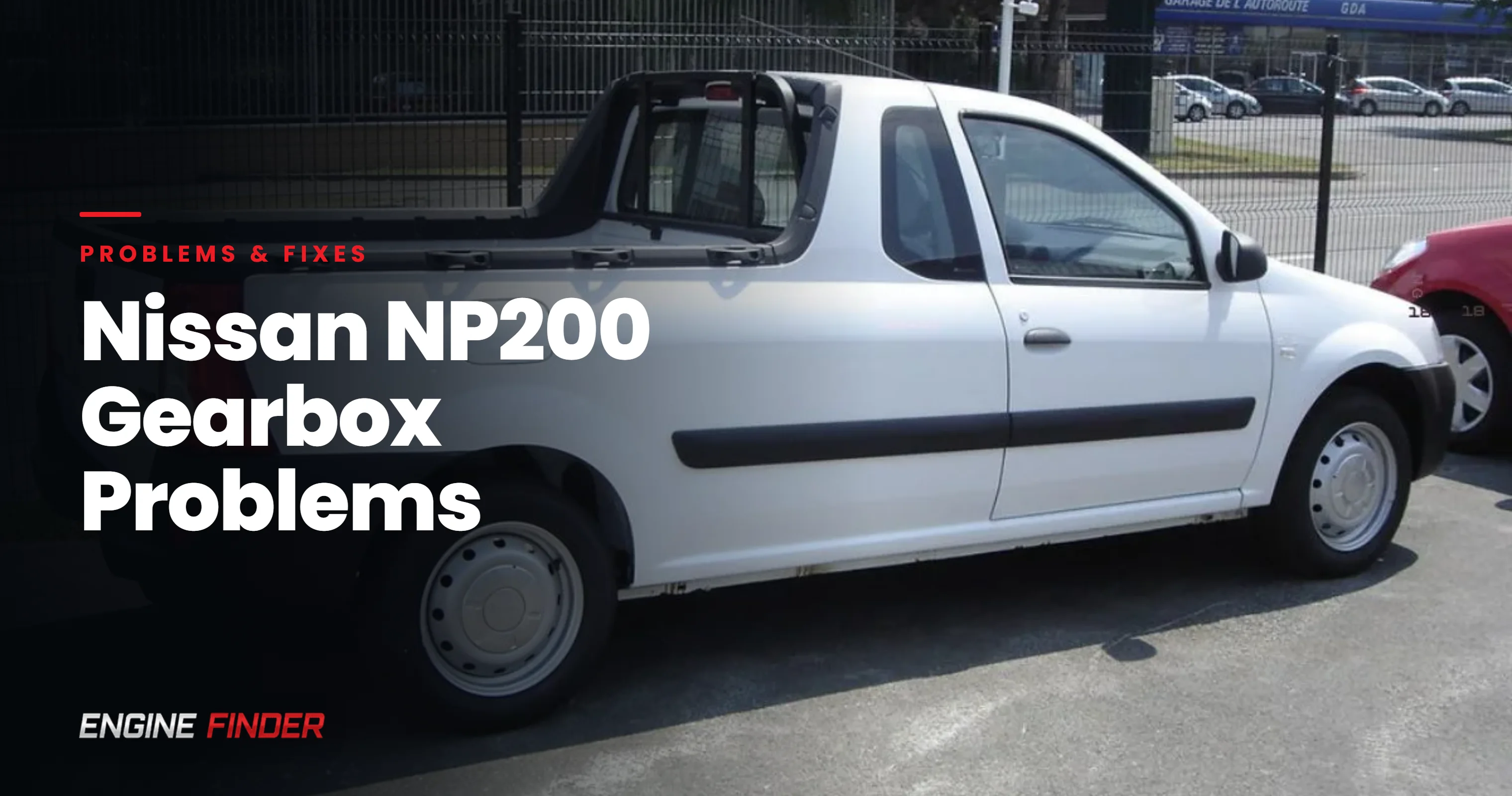
Nissan NP200 Gearbox Problems: JR5 Manual, Clutch & Costs (SA Guide)
Nissan NP200 gearbox problems explained — the Renault JR5/JH3 manual, crunchy shifts, 5th-gear whine, soft-clutch cylinder faults, and what a used or recon NP200 gearbox costs in SA.
Manual Gearbox Replacement Cost in South Africa (2026 Guide)
How much does manual gearbox replacement cost in South Africa? Budget exchange from R4,000 fitted; heavy-duty bakkie installs reach R32,000+. Real SA prices by model, gearbox codes, labour hours, and a worth-it decision framework.
Important Disclaimer
This content is for informational purposes only and is based on research from automotive industry sources. Engine Finder is not a certified automotive repair facility. Always consult with qualified automotive professionals before performing any repairs or maintenance. Improper repairs can result in personal injury, property damage, or vehicle malfunction. We assume no responsibility for actions taken based on this information.