Isuzu D-Max 1.9 Engine Problems: Common Issues, Costs & Reliability (SA)

The Isuzu D-Max 1.9 launched in South Africa in 2018 as the smaller-displacement option alongside the larger 3.0 4JJ1, fitted with the RZ4E-TC turbo diesel. It quickly became a popular choice for fleet operators, light-duty workhorses and double-cab buyers who wanted lower running costs without giving up Isuzu’s reputation for hard-wearing pickups. Several model years later, a clear pattern of recurring issues has emerged in owner forums, scrapyard intake data and workshop bulletins.
This guide focuses on the D-Max 1.9 as a vehicle — model years, common mileage milestones at which problems appear, and indicative repair costs in rand. For a deep technical breakdown of the engine itself (oil consumption mechanisms, recall details, ECU software issues, towing capacity vs the 3.0), see our dedicated Isuzu 1.9 DDi/RZ4E engine troubleshooting guide. Engine Finder has been connecting South African D-Max owners with reliable replacement parts and used engines since 2016, so the cost estimates below reflect real workshop and supplier pricing.
Key Takeaways
| Problem | Typical Onset | Indicative SA Cost |
|---|---|---|
| EGR cooler / valve carbon build-up | 80,000 – 120,000 km | R6,000 – R15,000 |
| DPF blocking and failed regens | 90,000 – 150,000 km | R3,000 (forced regen) – R20,000 (replace) |
| Injector wear and rough running | 150,000 km+ | R3,500 – R6,500 per injector |
| Turbocharger (VGT) failure | 130,000 – 200,000 km | R12,000 – R28,000 fitted |
| Timing chain stretch (less common) | 180,000 km+ | R15,000 – R25,000 |
Costs are indicative only and will vary by region, workshop, and parts source. Get a written quote before any work begins.
What Is the D-Max 1.9?
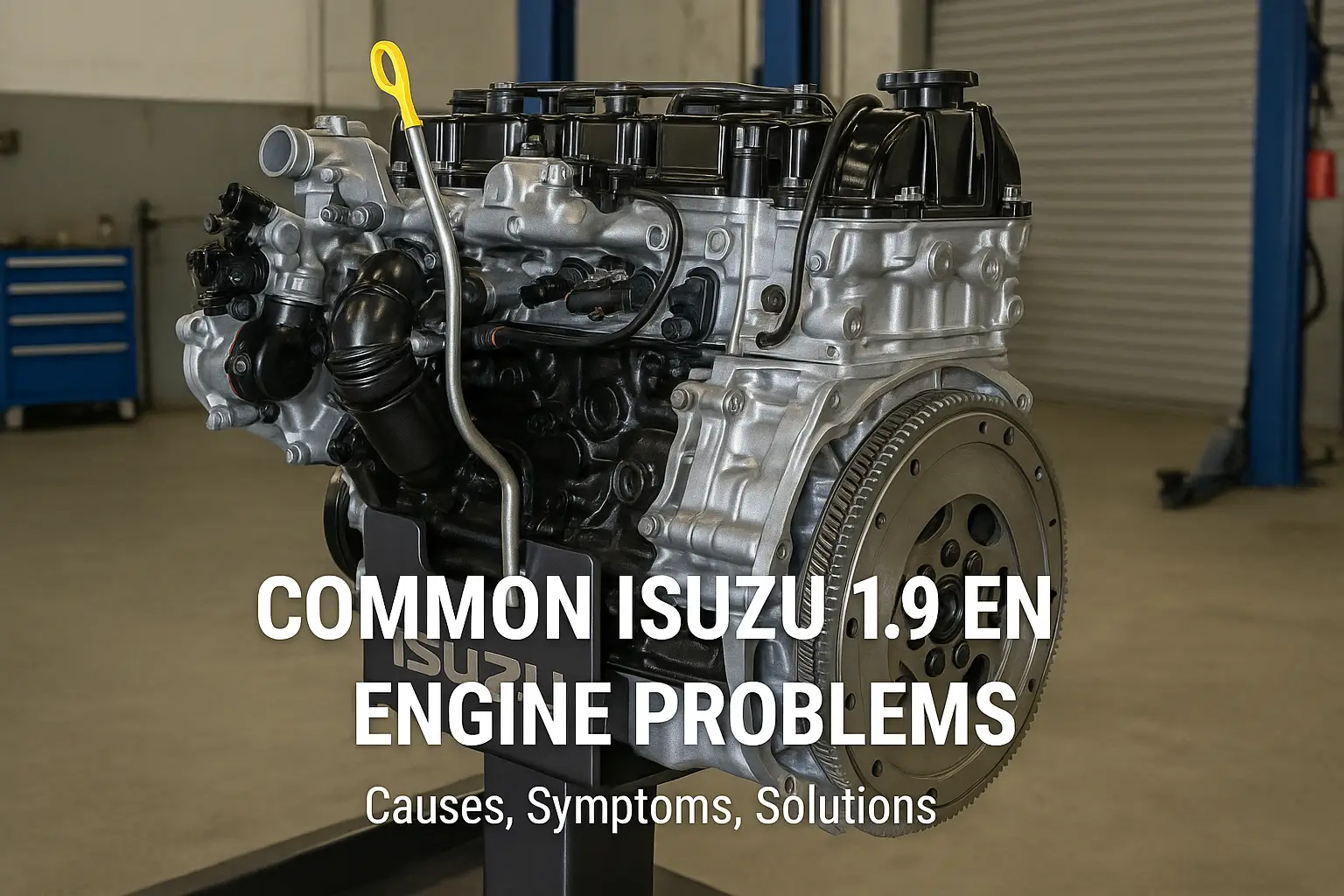
The Isuzu D-Max 1.9 is powered by the RZ4E-TC — a 1,898 cc four-cylinder common-rail turbo diesel producing 110 kW and 350 Nm, paired with either a six-speed manual or six-speed automatic. It uses a variable-geometry turbocharger (VGT), exhaust gas recirculation (EGR) and a diesel particulate filter (DPF) to meet Euro 5 emissions standards.
In South Africa the engine arrived in 2018 in the D-Max range and was later also fitted to the MU-X SUV. It replaced the older 2.5 4JK1 in the entry and mid-spec double cabs, sitting alongside the 3.0 4JJ1 at the top of the range. The same RZ4E powerplant has been used in the Thai-market D-Max since 2015, so by the time SA cars hit higher mileages there was already a decent overseas track record to draw on. Cars.co.za’s KB and D-Max buyer’s guide covers model-year variations and known issues for the 2013-2021 range in detail.
If you want every spec, recall, and technical nuance, the RZ4E engine deep-dive linked above covers it in detail.
Common Problem 1: EGR Cooler and Valve Issues
The single most reported D-Max 1.9 issue on local forums is EGR-related — either the EGR valve sticking with carbon, or the EGR cooler developing internal leaks. Symptoms typically appear between 80,000 km and 120,000 km, often earlier on vehicles used primarily for short stop-start trips.
Symptoms
- Rough idle, especially when cold
- Power loss and black smoke under load
- Check engine light with EGR-related fault codes
- Occasional engine stalling at idle
- White smoke or coolant loss if the EGR cooler is leaking internally
Why it happens on the D-Max 1.9
The RZ4E uses Isuzu’s “Intelligent EGR” system to lower combustion temperatures and reduce NOx. Soot from EGR gases combines with oil mist from the crankcase breather, gradually caking the EGR valve, intake runners and cooler. Short trips and poor-quality diesel accelerate the process.
Repair cost in SA
- EGR valve clean and intake decoke: R6,000 – R9,000
- EGR valve replacement: R8,000 – R12,000
- EGR cooler replacement: R10,000 – R15,000 fitted
DIY decoking is possible but messy and time-consuming (4–6 hours). Most owners hand it to an Isuzu specialist.
Common Problem 2: DPF Blocking and Failed Regens
The DPF is the second-biggest source of D-Max 1.9 workshop visits. Owners who do mostly urban driving — fleet vehicles, school runs, parts couriers — see problems earliest, often from 90,000 km onwards.
Symptoms
- DPF warning light or “engine system service required” message
- Limp mode with sharply reduced power
- Failed automatic regeneration cycles
- Higher than usual fuel consumption
- Occasional puffs of white smoke after a long highway run
Why it happens on the D-Max 1.9
Short trips at low engine load never let the exhaust reach the ~600°C required to burn off accumulated soot. Once the DPF is more than about 80% loaded, the ECU keeps trying to force regens, which dumps extra fuel through the cylinders — some of which slips past the rings into the sump, raising oil level and diluting it. Diesel quality variation in SA makes this worse.
Repair cost in SA
- Forced regeneration at a workshop (with diagnostic tool): R3,000 – R5,000
- Off-vehicle DPF chemical clean: R6,000 – R9,000
- DPF replacement (genuine): R15,000 – R20,000 fitted
A used DPF from a stripping vehicle is often the most economical fix — check supplier listings on Engine Finder.
Common Problem 3: Injector Issues
The RZ4E’s injectors have a noticeably better record than the older 3.0 4JJ1’s, but they do wear. Forum reports start to cluster around 150,000 km, particularly on vehicles that have run on fuel from less reputable forecourts or with a neglected fuel filter.
Symptoms
- Hard starting when cold
- Rough idle or audible misfire
- Black smoke under acceleration
- Reduced fuel economy
- Diesel knock louder than normal
Repair cost in SA
- Injector test and clean (on-bench): R1,200 – R2,500 per injector
- New injector replacement: R3,500 – R6,500 per injector fitted
- Full set of four with re-coding: R18,000 – R28,000
Always replace the fuel filter and have the rail pressure regulator checked at the same time — replacing only the injectors without addressing root cause is a common repeat-failure trap.
Common Problem 4: Turbocharger Failures
The variable-geometry turbo is generally reliable on the D-Max 1.9, but VGT vanes can stick with carbon, and oil starvation kills bearings if oil changes have been stretched. Failures typically appear from 130,000 km onwards.
Symptoms
- Whistling, whining or grinding noises from the turbo
- Loss of boost — flat acceleration above 2,000 rpm
- Blue smoke under acceleration (oil leak into the intake)
- Excessive turbo lag
- Boost-related fault codes
Repair cost in SA
- Turbo actuator replacement: R6,000 – R10,000
- VGT clean and reseal: R8,000 – R14,000
- Full turbocharger replacement: R12,000 – R28,000 fitted (used vs new)
For high-mileage cars, a quality used turbo from an Isuzu stripper is the most realistic option. If the engine itself is tired, swapping a full used D-Max 1.9 RZ4E engine often makes more financial sense than rebuilding the turbo on a 250,000 km motor.
Common Problem 5: Timing Chain Stretch
Less common than the EGR/DPF/injector cluster, but worth knowing about. A stretched timing chain has been reported on a small number of high-mileage D-Max 1.9 units, typically over 180,000 km.
Symptoms
- Rattle on cold start that fades after a few seconds
- Cam/crank correlation fault codes
- Slight loss of performance and economy
Repair cost in SA
- Timing chain kit (chain, tensioner, guides) fitted: R15,000 – R25,000
This is a heavy strip-down job and only worth doing on otherwise sound, lower-mileage examples. On a high-kilometre vehicle, an engine overhaul or replacement engine is usually a better long-term spend.
D-Max 1.9 vs 3.0 Reliability Comparison
The big question buyers ask is whether the 1.9 is “the unreliable one”. The honest answer: no — but it has a different problem profile.
-
The 3.0 4JJ1 has been in SA since 2007 with a long track record of reliable service. It pulls strong torque from low down, tows heavy loads comfortably, and the injectors and DPF are well-understood by every Isuzu workshop. Downsides are higher fuel use, higher service costs, and an ageing platform.
-
The 1.9 RZ4E is a more modern, more refined engine. Fuel economy is significantly better (a real-world 8–9 L/100km vs 9.5–11 for the 3.0), NVH is lower, and the engine has been in production globally since 2015 — so it is a proven design, not an unknown. The trade-offs are tighter tolerances (less forgiving of poor diesel and skipped services), and a lower towing comfort margin when at maximum braked load.
For light-duty work, daily driving, and trailers up to about 2.5 tonnes, the 1.9 is the better all-round buy. For heavy towing, off-road overlanding with a full load, or operators who plan to do 400,000+ km, the 3.0 is still the safer choice. Owner discussions on the 4x4Community D-Max experience thread back this up — frustrations mostly relate to towing-related accessories and dealer support rather than catastrophic engine failure. For more on the older 2.5 platform, see our Isuzu KB 250 problems guide.
Maintenance Recommendations
Isuzu’s service book specifies 15,000 km oil change intervals on the 1.9. For South African conditions — dusty rural roads, variable diesel quality, frequent short urban trips — we recommend tightening that to 10,000 km or 6 months, whichever comes first.
Other key maintenance items:
- Engine oil: 5W-30 meeting ACEA C3 (low-SAPS, full synthetic). Never use a non-low-SAPS oil — it will block the DPF and accelerate EGR carbon build-up.
- Fuel filter: Replace every 20,000 km, or every 10,000 km if the vehicle works in dusty or rural areas. Drain the water separator monthly.
- Air filter: Inspect at every service, replace at 40,000 km — sooner in dusty conditions.
- DPF management: Once every two weeks, give the vehicle a 30-minute highway run at 80 km/h+ to allow passive regeneration.
- Diesel quality: Stick to reputable forecourts — Engen, Sasol, Shell, BP, Total. Avoid bulk farm diesel unless you trust the source.
If real-world fuel consumption starts creeping above 11 L/100km in mixed driving, that is usually the first early warning that something is off — AutoTrader SA’s D-Max fuel-economy guide covers the driving-habit and maintenance fixes worth ruling out before booking a workshop diagnostic.
When to Replace the Engine vs Repair
A simple decision framework for D-Max 1.9 owners facing major engine work:
- Under 150,000 km, single issue (e.g. one injector, EGR cooler, turbo) → repair. The engine has plenty of life left.
- 150,000 – 220,000 km, multiple issues stacking up (e.g. EGR + DPF + early injector wear) → get a quote for both repair and engine replacement, then compare against the value of the vehicle.
- Over 220,000 km, major internal failure (compression loss, knock, oil pressure) → a used replacement engine from a reputable stripper is almost always the better option. A complete replacement D-Max engine typically costs less than rebuilding a tired RZ4E.
- Any mileage, engine block damage (hole, cracked head, severe overheat) → replace.
Always get more than one workshop quote for the diagnosis, not just the repair, and ask the workshop to show you the actual fault codes and live data.
FAQ
What is the most common Isuzu D-Max 1.9 engine problem?
EGR-related issues — either a carboned-up EGR valve or a leaking EGR cooler — are the most frequently reported D-Max 1.9 problem on local forums. They typically appear between 80,000 km and 120,000 km, and are made worse by short urban trips and poor-quality diesel. Symptoms include rough idle, power loss, black smoke and check engine lights.
How reliable is the Isuzu D-Max 1.9 in South Africa?
Overall reliability is good — comparable to other modern Euro 5 turbo diesel pickups in the SA market. The 1.9 RZ4E is mechanically a sound design that has been in production globally since 2015. The issues that do appear (EGR, DPF, injectors at high mileage) are emissions-system related rather than fundamental engine flaws, and most are well within the skill set of an Isuzu specialist workshop.
How long does the D-Max 1.9 engine last?
With disciplined servicing (10,000 km oil changes, quality diesel, regular highway runs), 250,000 – 350,000 km before major engine work is realistic. Many fleet-operated units have already exceeded 300,000 km on original internals. Engines that have been short-tripped, run on dirty diesel or had stretched service intervals can develop major problems much sooner — sometimes before 150,000 km.
Is the D-Max 1.9 RZ4E the same engine as in the Mu-X?
Yes. The RZ4E-TC fitted to the South African Isuzu MU-X (from 2023 onwards) is the same engine as in the D-Max 1.9, with the same 110 kW / 350 Nm output and the same common failure points. Repair procedures and part numbers are largely interchangeable between the two vehicles.
How much does a used D-Max 1.9 engine cost in SA?
Indicative pricing from Engine Finder suppliers ranges from R45,000 to R75,000 for a complete used RZ4E-TC engine, depending on mileage, supplier, and whether ancillaries (turbo, injectors, manifold) are included. Fitting and ancillary refresh typically adds R15,000 – R25,000. Always insist on a written warranty — most reputable suppliers offer 3 to 6 months.
Looking for D-Max 1.9 Parts or a Replacement Engine?
Engine Finder connects you with vetted South African suppliers offering used and reconditioned Isuzu D-Max RZ4E engines, parts and stripping vehicles. Submit one enquiry and multiple suppliers will quote you directly — no chasing required.
Related Articles
Explore more insights on similar topics
Ford Focus Gearbox Replacement Cost in South Africa (2026 Guide)
Ford Focus gearbox replacement costs R6,000–R18,000 for a manual and R18,000–R38,000 for the PowerShift DCT in South Africa. Full price breakdown by variant, known DPS6 problems, and how to save.
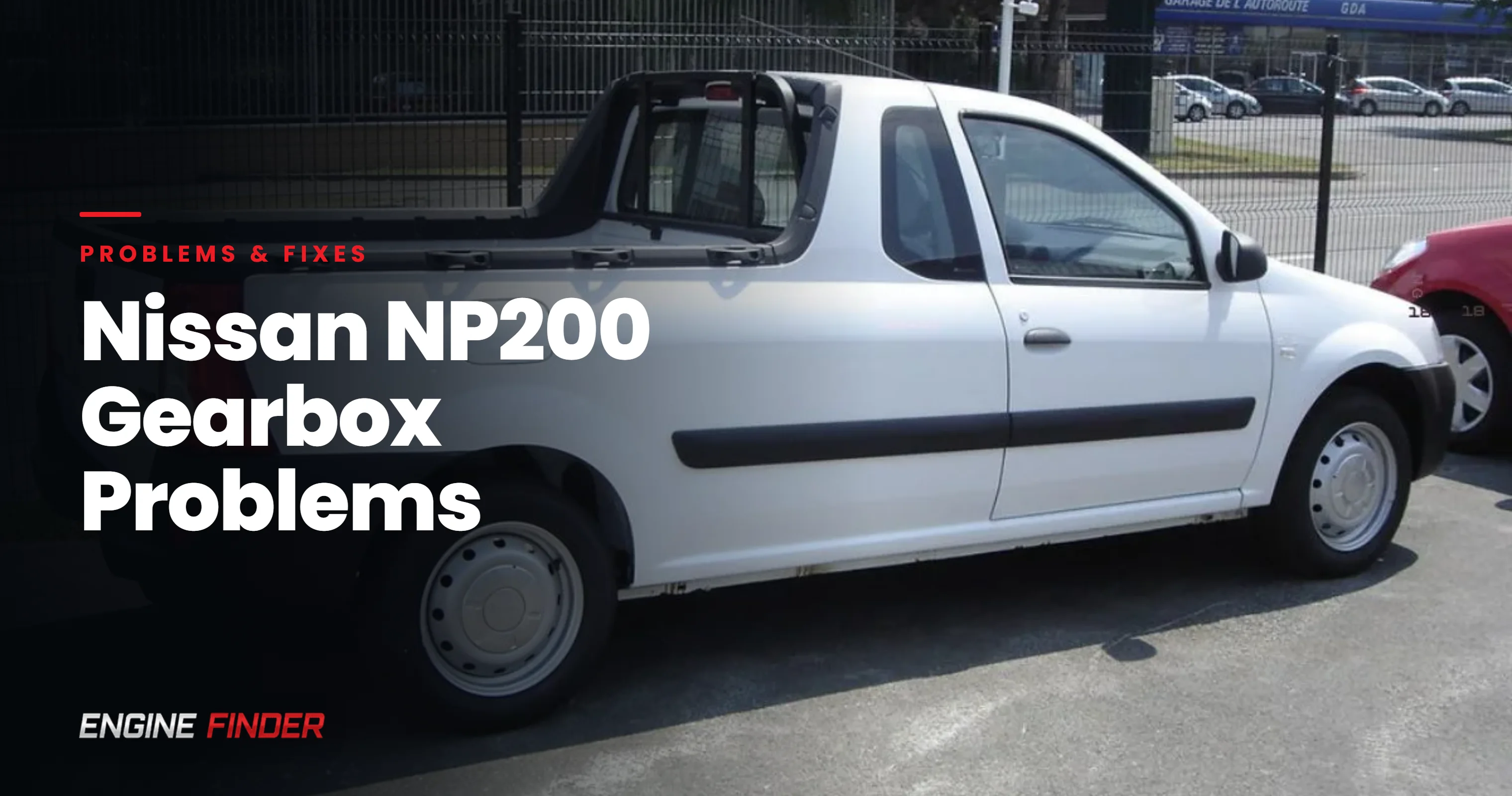
Nissan NP200 Gearbox Problems: JR5 Manual, Clutch & Costs (SA Guide)
Nissan NP200 gearbox problems explained — the Renault JR5/JH3 manual, crunchy shifts, 5th-gear whine, soft-clutch cylinder faults, and what a used or recon NP200 gearbox costs in SA.
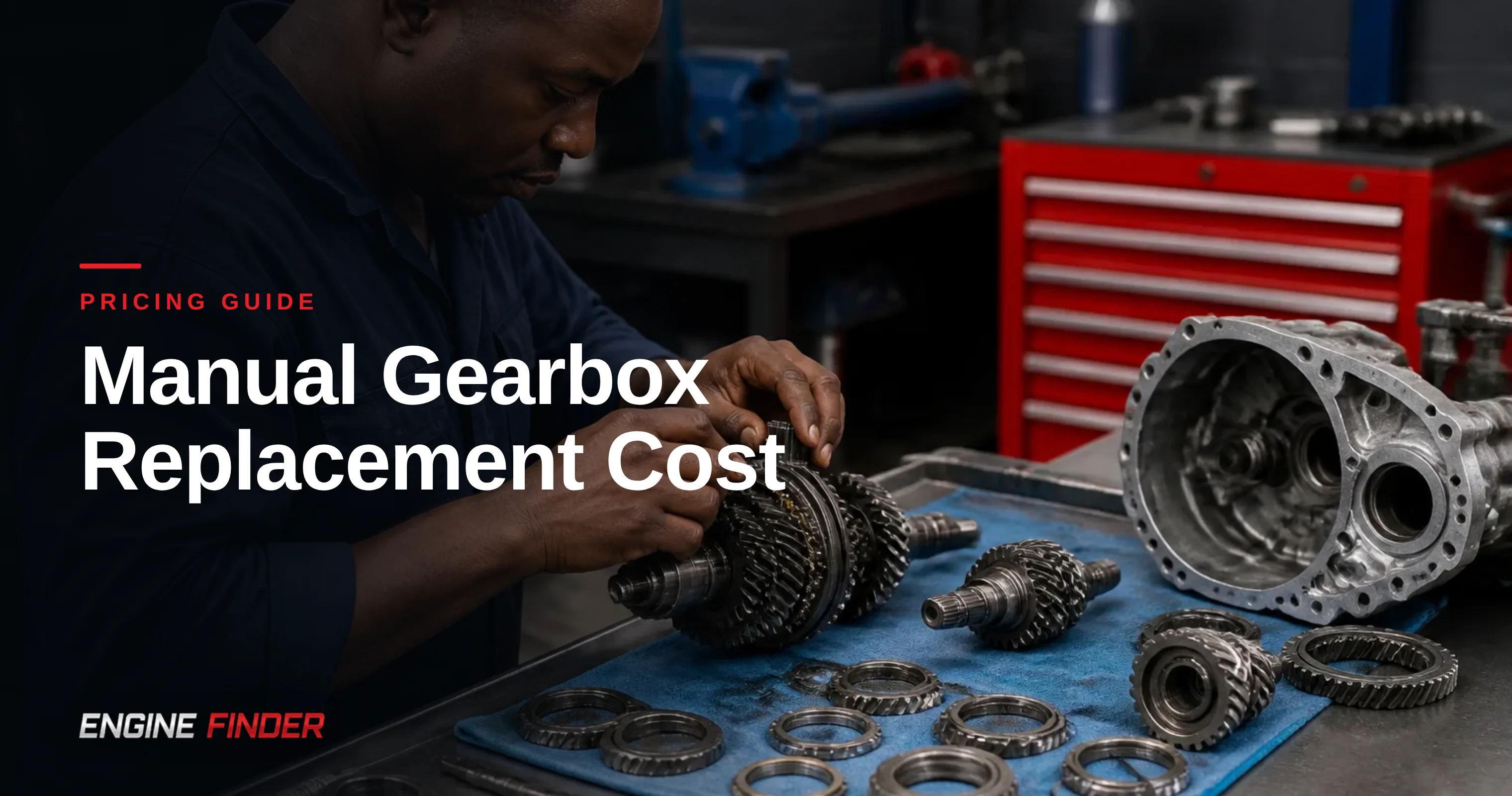
Manual Gearbox Replacement Cost in South Africa (2026 Guide)
How much does manual gearbox replacement cost in South Africa? Budget exchange from R4,000 fitted; heavy-duty bakkie installs reach R32,000+. Real SA prices by model, gearbox codes, labour hours, and a worth-it decision framework.
Important Disclaimer
This content is for informational purposes only and is based on research from automotive industry sources. Engine Finder is not a certified automotive repair facility. Always consult with qualified automotive professionals before performing any repairs or maintenance. Improper repairs can result in personal injury, property damage, or vehicle malfunction. We assume no responsibility for actions taken based on this information.