Used Engine Warranty in South Africa: What to Expect (2026 Guide)

Key Takeaways
| Topic | Key Information | Important Details |
|---|---|---|
| Typical Terms | 3-6 months parts standard | Premium 6-12 months parts + labour available at +15-25% |
| What’s Covered | Internal mechanical failure | Block, head, internals, manufacturing defects |
| What’s Excluded | Wear parts + install errors | Timing belts, water pumps, no-coolant damage, mod-related failure |
| How to Claim | Document everything | Install receipts, engine code photo, mechanic diagnostic report |
| Red Flags | Verbal-only guarantees | No written terms = no warranty in practice |
Yes, Used Engines in South Africa Do Come With Warranties
If you’re hesitating to buy a used engine because you’re worried about being stuck with a lemon — take a breath. Reputable South African engine suppliers absolutely do offer warranties on used engines. The standard across most established scrap yards and engine importers sits at 3 to 6 months on parts, with some premium suppliers extending cover to 12 months including labour.
The catch? Terms vary wildly from one supplier to the next. A scrap yard selling a “tested working” engine for R8,000 might give you 30 days. An importer selling a low-kilometre Japanese half-cut for R45,000 might offer six months parts and labour. Understanding what’s normal — and what’s a warning sign — is the single biggest thing you can do to protect yourself before handing over money.
The most important thing to know: regardless of what any supplier’s written terms say, SA law (CPA Section 56) gives you a 6-month statutory implied warranty on any used engine bought from a business seller. Suppliers’ own warranties sit on top of this floor, not instead of it.
This guide walks through typical warranty terms in SA, what they cover (and don’t), how to claim if something goes wrong, and the red flags that should send you looking elsewhere. If you’d rather skip the homework and compare verified suppliers with written warranty terms, Engine Finder has been connecting buyers with vetted suppliers since 2016.
Your Statutory Rights Under the CPA (Consumer Protection Act)
Before we talk about supplier warranties, understand this: South African law gives you a 6-month implied warranty on any used engine you buy from a business supplier, regardless of what their written terms say.
Under Section 56 of the Consumer Protection Act (CPA, Act 68 of 2008):
- Any goods sold by a supplier “in the ordinary course of business” come with an implied warranty that they are of good quality and free from defects for 6 months from delivery
- If a defect appears in that window, you can choose repair, replacement, or refund — your choice, not the supplier’s
- This warranty cannot be waived, excluded, or contracted out of — not by “as-is”, not by “voetstoots”, not by signing a disclaimer
- Return of the defective engine is at the supplier’s risk and expense (not yours)
The supplier’s own written warranty (3 months, 6 months, 12 months — whatever it offers) sits on top of this statutory floor, not instead of it.
Caveat: Section 56 applies to business sellers. A genuine private seller (someone selling their own car’s engine, not as part of a business) is exempt — those sales remain caveat emptor.
Where to escalate disputes: the National Consumer Commission (NCC), the Motor Industry Ombudsman of South Africa (MIOSA), or the Consumer Goods and Services Ombud (CGSO). The Retail Motor Industry Organisation (RMI) has also published guidance confirming that used vehicle parts carry the same 6-month implied warranty as new goods, subject only to fair wear and tear.
Typical Used Engine Warranty Terms in South Africa
Here’s what the market actually offers:
| Tier | Duration | What’s Covered | Typical Cost Impact |
|---|---|---|---|
| Budget / As-Is* | 0-30 days or none | Visual condition only, no internal cover | Cheapest option — often R3,000-R10,000 below standard |
| Standard | 3-6 months | Parts only — internal mechanical failure | Baseline price |
| Premium | 6-12 months | Parts + labour, sometimes including towing | +15-25% above standard |
| Remanufactured | 12-24 months | Full mechanical + workmanship | +40-80% above standard used |
Note: Business sellers cannot contract out of the CPA’s 6-month implied warranty regardless of what their stated terms say. The figures in this row represent the supplier’s WRITTEN warranty only — your statutory CPA cover applies on top.
Most buyers end up on the standard 3-6 month parts-only tier, which is fair for the price point. If you’re spending more than R30,000 on an engine, it’s worth asking whether the supplier offers a premium tier — the extra cost can be worth it for the labour cover alone, since refitting an engine can run R8,000-R15,000 at a workshop.
For context on what you should actually be paying for the engine itself, our used engine pricing guide for South Africa breaks down current market rates by engine type.
What a Used Engine Warranty Typically Covers
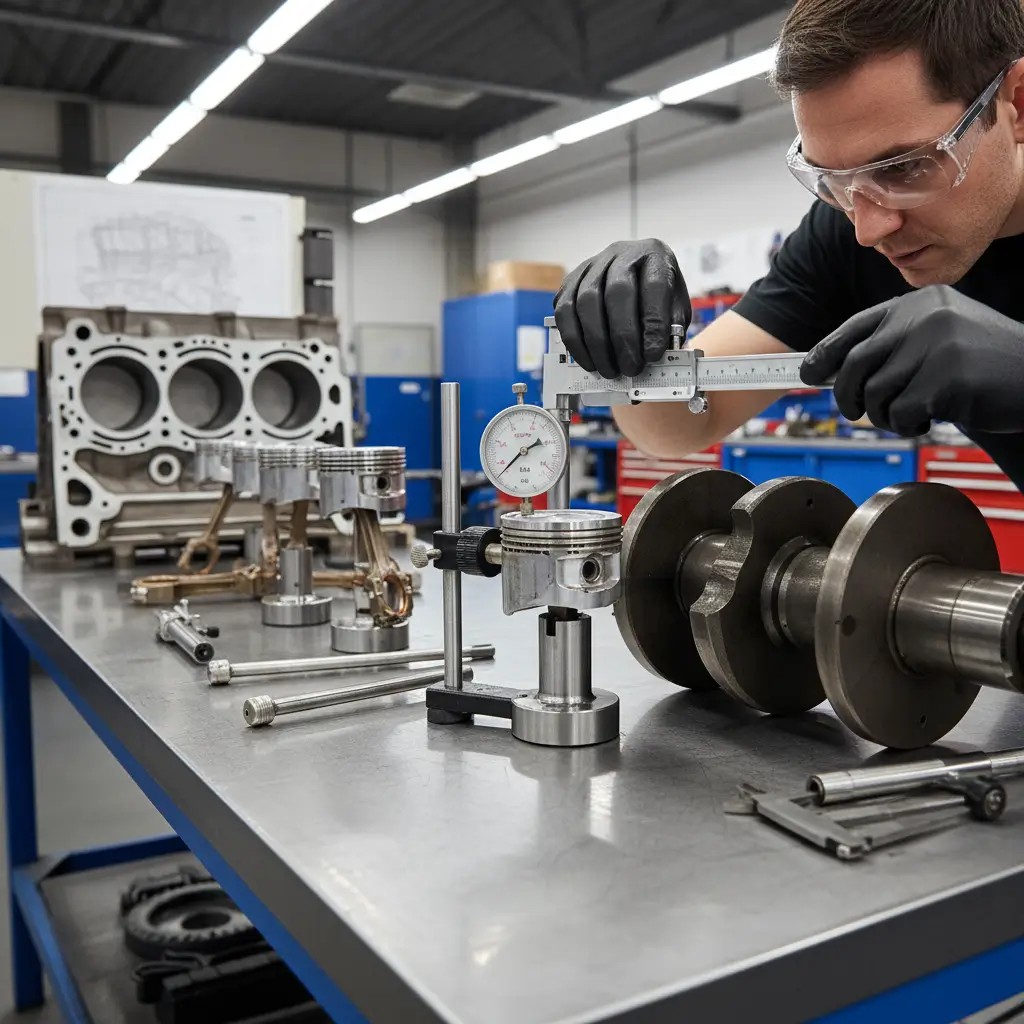
A standard used engine warranty in SA covers internal mechanical failure — the things that would only fail because the engine itself is defective, not because of how it was installed or used. Specifically:
- Block and head integrity — cracks in the engine block or cylinder head that develop within the warranty period
- Internal rotating components — seized bearings, broken crankshafts, snapped conrods, scored cylinder bores
- Compression-related failure — provided the failure isn’t caused by abuse (over-revving, running lean, etc.)
- Manufacturing defects — primarily relevant to remanufactured engines where the supplier rebuilt the unit
- Major oil leaks from the block or head (some suppliers exclude gasket leaks — check the fine print)
If you’re buying a remanufactured engine, the warranty should also cover the quality of the rebuild work itself — bearings, rings, valve seats, machining tolerances.
What a Used Engine Warranty Typically Does NOT Cover
This is where most warranty disputes start. The exclusions list on a used engine warranty is usually longer than the inclusions list, and for good reason — there’s a lot the supplier can’t control once the engine leaves their yard:
- Wear-and-tear parts — timing belts, water pumps, thermostats, gaskets, seals, hoses. These are your responsibility to replace during install. A reputable workshop will refuse to fit a used engine without renewing these items.
- Improper installation damage — bent valves from incorrect timing, blown head gaskets from poor torque sequence, damaged sensors from rough handling. Always use a workshop that has fitted used engines before.
- Running without coolant or oil — the fastest way to destroy any engine and a guaranteed warranty void.
- Sensor failures and electrical faults — most used engines are sold as a “long block” or “short block.” Sensors, looms, and ECUs are typically excluded.
- ECU mismatches — if your car’s ECU isn’t compatible with the donor engine’s variant, that’s a buyer responsibility, not a supplier defect.
- Modifications and chip tuning — any aftermarket performance work voids virtually every used engine warranty in SA.
- Cosmetic damage — paint, surface rust, missing covers, ancillary brackets.
The “wear parts” exclusion catches a lot of first-time buyers off guard. The supplier is selling you an engine, not a complete refurbishment. Budget an extra R3,000-R8,000 for a timing kit, water pump, gaskets, and fluids when planning your install.
For more context on engine lifespan after install, see how long engines typically last — a properly installed used engine with fresh wear parts can easily run another 150,000-200,000 km.
How to Claim on a Used Engine Warranty
If something does go wrong within the warranty period, your claim will live or die on documentation. Here’s how to protect yourself from day one:
Before install:
- Photograph the engine code, VIN tag (if applicable), and any identifying marks the moment you collect or receive the engine.
- Keep the original supplier invoice with the engine number written on it.
- Photograph the engine bay and old engine before removal — useful evidence if there’s a dispute about install quality.
At install:
- Use a registered workshop and keep the install receipt. The receipt should show the date, the workshop’s details, and confirm that wear parts (timing kit, water pump, etc.) were replaced.
- Have the workshop note any defects they spot on arrival — if the engine arrived with a problem, you want that on record before they fit it.
When a failure occurs:
- Stop driving the vehicle immediately. Continuing to drive a failing engine almost always voids the warranty.
- Notify the supplier in writing (email or WhatsApp with timestamp) within the period specified in your warranty — most suppliers require notification within 7-14 days of the failure.
- Get a diagnostic report from a qualified mechanic. The report should state the suspected cause of failure and rule out install-related issues.
- Be prepared to return the failed engine. Most SA suppliers will only replace or refund after they’ve inspected the failed unit themselves.
A polite, well-documented claim usually gets resolved within a few weeks. If a supplier goes quiet or starts shifting blame without inspecting the engine, that’s when you escalate to the NCC (National Consumer Commission) or your bank if you paid by EFT-backed card.
Red Flag Warranty Terms to Walk Away From
If you see any of these during a quote conversation, slow down:
- Verbal-only “guarantees” with nothing in writing. A handshake means nothing if the supplier disappears.
- No supplier address, registration number, or VAT number on the invoice. Legitimate businesses have nothing to hide.
- Warranty void if installed by anyone except the seller’s preferred workshop. Sometimes legitimate (the supplier knows the workshop won’t damage the engine), often anti-consumer (locks you into a kickback arrangement). Ask why.
- Unclear coverage scope — “warranty included” with no specifics. Always insist on a written list of what is and isn’t covered.
- Requires payment in full upfront before the engine ships with no proof-of-life photos or video. A deposit is fair; the full price with no escrow is risky.
- No phone number that connects to a human during business hours. If you can’t reach them now, you won’t reach them when you need to claim.
- Pressure to skip the written warranty (“I’ll just sort you out if anything goes wrong”). Same problem as the verbal guarantee.
For more on vetting suppliers before you buy, see our guide on where to buy a used engine in South Africa.
Engine Finder’s Role
Every supplier listed on Engine Finder commits to displaying their warranty terms in writing on each listing — duration, what’s covered, and any conditions. The marketplace structure means you can compare warranties side by side before requesting a quote, instead of finding out the terms after you’ve already paid a deposit. For broader context on your statutory protections when dealing with any motor trade supplier, the RMI’s guide to basic consumer rights for motorists is a useful primer.
We’ve been connecting South African buyers with vetted engine suppliers since 2016, and every supplier on the platform has been screened for legitimate business registration, working contact details, and a track record of honouring warranty claims. If a supplier consistently fails to honour their stated warranty, they get removed.
That doesn’t mean every claim is automatic — disputes happen, and there are always edge cases. But starting with a supplier who has a public reputation to protect makes the whole process less stressful than picking a random Gumtree ad. This matters even more when you’re sourcing a replacement engine for an imported vehicle, where local supply is already tight.
Frequently Asked Questions
Q: Can a scrap yard sell me an engine “as-is” with no warranty?
Not quite — and this is widely misunderstood. Under CPA Section 56, business sellers cannot contract out of the 6-month implied warranty. A blanket “as-is” or “voetstoots” clause does NOT defeat your statutory right to repair/replace/refund for hidden defects.
What “as-is” CAN exclude is specific defects that the seller disclosed in writing AND that you signed for in advance. So if the yard tells you upfront “this engine has a cracked block, sold for parts only” and you sign acknowledging that, you can’t claim warranty on the cracked block. But you still have CPA cover for anything they DIDN’T disclose (e.g. a worn bearing that fails 2 months later).
If a seller tells you “no warranty, take it or leave it” — they’re either uninformed or hoping you are. You still have 6 months of statutory cover.
How long is a typical used engine warranty in South Africa? The standard is 3-6 months on parts. Premium suppliers offer 6-12 months including labour. Remanufactured engines often carry 12-24 month warranties because the supplier has rebuilt the unit themselves.
Can I claim warranty if I installed the engine myself? It depends on the supplier. Some require installation by a registered workshop with a proper invoice as a warranty condition. Others allow DIY installs but reserve the right to inspect the work if a claim arises. Always confirm this before you buy — it’s a deal-breaker for many home mechanics.
Does an imported used engine come with a warranty? Yes, reputable importers of Japanese and European used engines typically offer the same 3-6 month standard, sometimes longer because the engines arrive with lower kilometres. The key is buying from an established importer with a SA business address, not directly from an overseas seller.
What happens if the supplier disappears during the warranty period? This is the worst-case scenario, and it’s exactly why supplier reputation matters more than the warranty paper itself. If a supplier vanishes, your only recourse is the NCC, a small claims court action, or a chargeback if you paid by card. Always buy from suppliers with a verifiable business address and track record — the warranty is only as strong as the company behind it.
Is a 3-month warranty enough? For most buyers, yes — the majority of “lemon” used engines fail within the first 1,000-2,000 km of use, well inside a 3-month window. If you’re spending serious money (R40,000+) or buying for a vehicle you’ll use commercially, paying extra for 6-12 month cover is worth the peace of mind.
Ready to Compare Warranty Terms?
Don’t take a supplier’s word for it — see the written warranty before you pay. Compare verified suppliers and warranty terms on Engine Finder and request quotes from multiple yards at once. You’ll see warranty duration, coverage scope, and supplier credentials side by side, so you can pick the option that actually protects you.
Important Disclaimer
This content is for informational purposes only and is based on research from automotive industry sources. Engine Finder is not a certified automotive repair facility. Always consult with qualified automotive professionals before performing any repairs or maintenance. Improper repairs can result in personal injury, property damage, or vehicle malfunction. We assume no responsibility for actions taken based on this information.