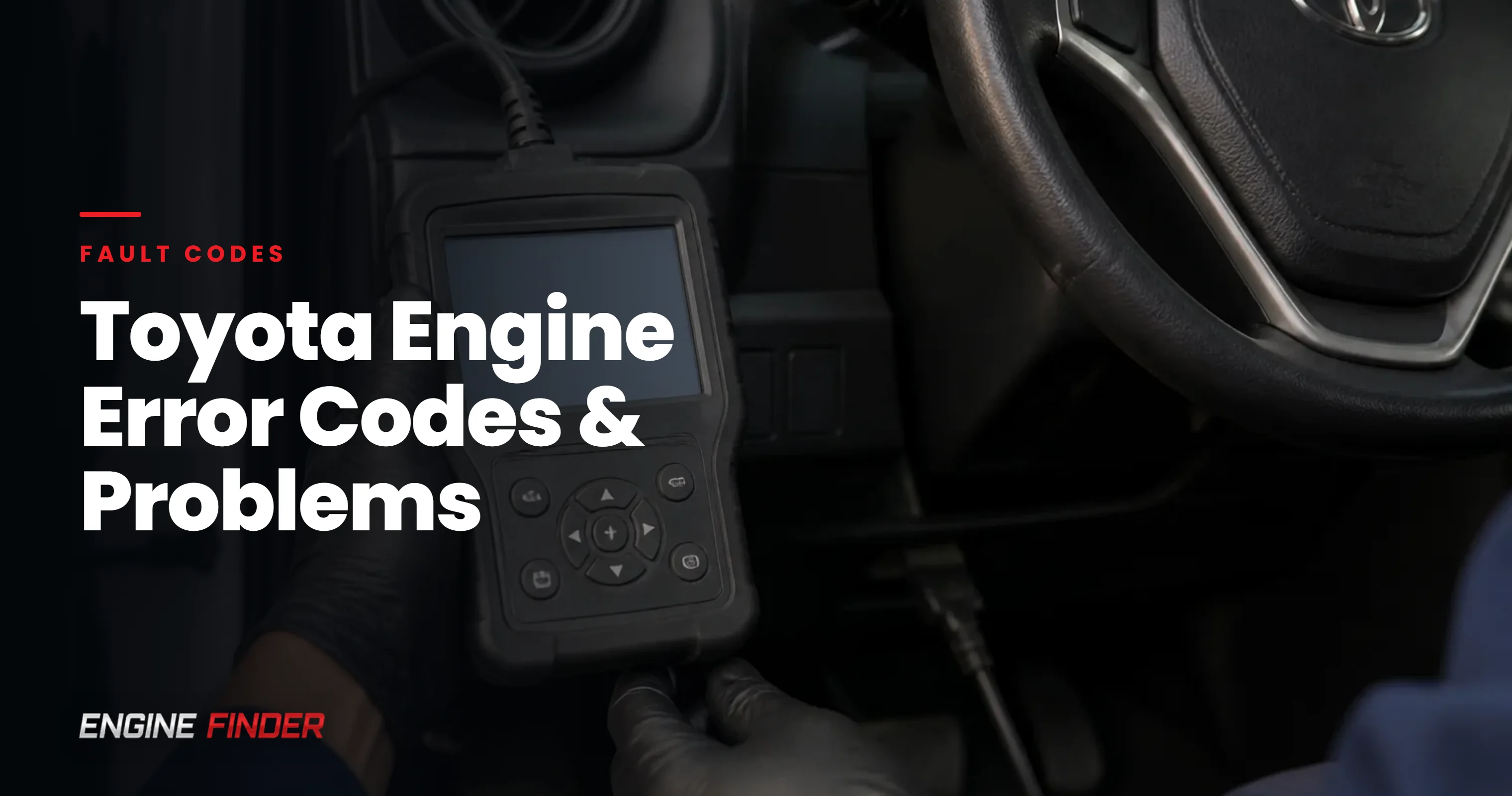
Toyota Engine Error Codes & Problems

Toyota Engine Error Codes Explained (SA Guide)
If your Toyota is showing a check-engine light, the fault code stored in the ECU is the fastest way to know what is wrong. Most Toyota codes are standard SAE (P0xxx) codes that mean the same thing on any car, but a handful — like P1601 on the Hilux and Fortuner diesels — are Toyota-specific and get widely mis-explained online. This guide gives you the correct meaning of the codes South African Toyota owners actually see, sorted into generic and Toyota-specific, so you can tell a cheap sensor swap apart from a code that points to a worn-out engine.
It covers the common-rail diesels most people are worried about — the 2.8 and 2.4 GD-6 (1GD-FTV / 2GD-FTV) in the current Hilux, Fortuner and Quantum, plus the older 3.0 D4D (1KD-FTV) — as well as the petrol Corolla and Quantum.
Key Takeaways
- Read the code first. A cheap OBD2 scanner (or Torque Pro on your phone) tells you which system is at fault before you spend a cent on parts.
- P0401/P0402 (EGR), P2002/P244B (DPF) and P1601 (injector correction) are the diesel codes that dominate SA Hilux/Fortuner GD-6 workshops.
- P0093 (large fuel leak), P0300 (misfire) and low-compression symptoms are the codes that can mean serious engine damage — not just a sensor.
- P1601 is NOT an immobiliser fault. On Toyota diesels it means the injector compensation codes were not registered after fitting new injectors or an ECU.
- When codes point to internal engine or injector damage that is not worth repairing, sourcing a good used Toyota engine or part is usually the cheaper route.
How To Read Toyota Fault Codes
Every Toyota built from the early 2000s onward has a 16-pin OBD2 port, usually under the dashboard on the driver’s side. To pull codes:
- Plug in a Bluetooth or WiFi ELM327 adapter (or a handheld scanner) and open an app such as Torque Pro.
- Turn the ignition to ON (engine off is fine for reading).
- Read the stored trouble codes and write them down before you clear anything.
- Note whether the code is generic (P0xxx) or manufacturer-specific (P1xxx / some C and U codes) — the letter and first digit tell you.
A code is a starting point, not a diagnosis. “P0300 misfire” tells you a cylinder is not firing; it does not tell you whether that is a R400 coil or a burnt valve. Always confirm with a compression test or live data before replacing expensive parts.
Common Generic Toyota Engine Codes (P0xxx)
These follow the SAE J2012 standard, so they mean the same thing on a Toyota as on any other brand. The table below lists the codes SA Toyota owners see most, with the real meaning, the usual cause and the typical fix.
| Code | Correct meaning | Common cause | Typical fix |
|---|---|---|---|
| P0011 | Intake camshaft timing over-advanced (Bank 1) | Wrong/dirty engine oil, stuck VVT oil control valve, worn timing chain | Correct oil grade/level, clean or replace VVT-i control valve |
| P0016 | Crankshaft–camshaft position correlation (Bank 1) | Stretched or jumped timing chain, worn cam/crank sensor | Inspect timing chain & guides, replace cam/crank sensor |
| P0171 | System too lean (Bank 1) | Vacuum/intake leak, dirty MAF, weak fuel pump | Smoke-test for intake leaks, clean MAF, check fuel pressure |
| P0300 | Random / multiple cylinder misfire | Worn plugs/coils (petrol), faulty injector, low compression | Replace plugs/coils, test injectors, run compression test |
| P0335 | Crankshaft position sensor ‘A’ circuit fault | Failed crank sensor, damaged reluctor ring, wiring | Replace crankshaft position sensor, check tone ring & wiring |
| P0340 | Camshaft position sensor ‘A’ circuit fault (Bank 1) | Failed cam sensor, wiring/connector fault | Replace camshaft position sensor, inspect wiring |
| P0401 | EGR flow insufficient | Carbon-clogged EGR valve & passages | Clean or replace EGR valve, decarbon the intake |
| P0402 | EGR flow excessive | Stuck-open EGR valve, faulty pressure sensor | Replace stuck EGR valve, check EGR pressure sensor |
| P0420 | Catalyst efficiency below threshold (Bank 1) | Aged catalytic converter, faulty rear O2 sensor | Verify O2 sensors, repair exhaust leaks, replace cat |
| P0234 | Turbocharger overboost condition | Stuck VNT/wastegate actuator, faulty boost sensor | Inspect VNT actuator, test boost pressure sensor |
| P0093 | Fuel system leak detected — large leak | Cracked common-rail pipe, leaking injector, pump seal | Pressure-test rail, replace leaking pipe/injector/pump |
Which of these signal major engine damage?
Most codes above are sensor- or wear-level repairs. Two are warnings you should take seriously:
- P0300 (random misfire) combined with low compression on one or more cylinders can point to a burnt valve, blown head gasket or worn bores. If plugs, coils and injectors check out, the next step is a compression and leak-down test.
- P0093 (large fuel leak) on a GD-6 or D4D common-rail diesel means high-pressure fuel is escaping — often a cracked rail pipe or a failed injector. Left alone it starves the engine and can wash down a bore, so it is a stop-driving-and-diagnose code.
Toyota-Specific Codes (P1xxx and diesel DPF codes)
These need a Toyota-aware scan tool to read fully, and several are unique to the GD-6 / D4D common-rail diesels.
| Code | Correct meaning | Common cause | Typical fix |
|---|---|---|---|
| P1601 | Injector correction (compensation) circuit — codes not registered | New injectors or ECU fitted without programming injector codes | Register injector correction codes with a Toyota scan tool; run pilot-quantity learning |
| P2002 | Diesel Particulate Filter (DPF) efficiency below threshold (Bank 1) | Soot/ash-loaded DPF that cannot regenerate | Forced regeneration, DPF clean or replace |
| P244B | DPF differential pressure too high (Bank 1) | Clogged DPF from short-trip driving, faulty pressure sensor | Forced regen or DPF clean, replace pressure sensor / clear hoses |
P1601 is not an immobiliser fault
This one trips up a lot of owners and even some workshops. On Toyota diesels — the 1KD/2KD D4D and the newer 1GD/2GD GD-6 — P1601 is the injector correction circuit code. Every diesel injector has a compensation (correction) code that must be typed into the ECU so it can meter fuel precisely. Fit new or reconditioned injectors, or swap the ECU, without registering those codes and the ECU flags P1601. The fix is not a new part — it is a scan-tool procedure: enter the injector codes and run the pilot-quantity learning routine until the code clears.
DPF codes on the GD-6 (P2002 / P244B)
South African Hilux and Fortuner GD-6 models fitted with a DPF are prone to soot build-up when the vehicle does mostly short, low-speed trips and never gets a chance to regenerate. P2002 (efficiency below threshold) and P244B (differential pressure too high) both point at a blocked filter. A forced regeneration often clears it; a filter that has ashed up permanently needs cleaning or replacing.
Injector faults and when they mean engine damage
Beyond P1601, injector-related codes (misfire on a single diesel cylinder, or a large fuel leak under P0093) are worth diagnosing carefully. A single leaking or over-fuelling injector can wash oil off a cylinder wall and, over time, score the bore. If a diesel is knocking, blowing blue-white smoke and throwing injector or misfire codes together, get a compression test before spending money on injectors — the engine itself may be the real problem.
When To Source A Used Engine Instead Of Repairing
Some codes are a clear signal that the cheapest path is a replacement engine rather than a repair:
- Persistent P0300 misfire with failed compression across multiple cylinders.
- P0093 large fuel leaks caused by internal damage rather than a single pipe.
- Diesel knock, heavy oil use and low compression alongside injector codes.
When the diagnosis points that way, a good second-hand engine is usually far cheaper than a full rebuild. Engine Finder connects you with vetted Toyota engine and parts suppliers across South Africa — see the range of used Toyota engines for sale, or read our deeper look at Toyota 2.8 GD-6 engine problems if that is the model you are running.
Frequently Asked Questions
What does P1601 mean on my Toyota Hilux? On Toyota diesels, P1601 is the injector correction (compensation) circuit code. It usually appears after new injectors or an ECU have been fitted without registering the injector codes. It is fixed with a scan tool, not by replacing parts. It is not an immobiliser or anti-theft fault, despite what some translated guides claim.
Is P0401 expensive to fix on a GD-6? Usually not. P0401 means insufficient EGR flow, almost always caused by carbon clogging the EGR valve and intake. Cleaning or replacing the EGR valve and decarbonising the intake normally clears it.
Can I keep driving with a P2002 or P244B DPF code? Short-term, gently, but you should get a forced regeneration or DPF service soon. Ignoring it lets the filter block further, which can push the engine into limp mode and eventually require an expensive DPF replacement.
Does a P0300 misfire code mean my engine is finished? Not necessarily. On petrol Toyotas it is often just worn spark plugs or coils. It only signals serious trouble when compression is low on the affected cylinders — that is when a burnt valve, head-gasket or bore wear is likely.
How do I read Toyota fault codes at home? Plug an ELM327 OBD2 adapter into the port under the dash, open Torque Pro (Android) or a similar app, and read the stored codes. Note them down before clearing anything so a workshop can see the history.
Sources
- SAE J2012 Diagnostic Trouble Code Definitions (full text){:target=“_blank” rel=“noopener noreferrer”}
- P0093 Fuel System Large Leak Detected — OBD-Codes.com{:target=“_blank” rel=“noopener noreferrer”}
- P1601 Toyota Injector Correction Circuit Malfunction — Bailey’s Diesel{:target=“_blank” rel=“noopener noreferrer”}
- P2002 Diesel Particulate Filter Efficiency Below Threshold — OBD-Codes.com{:target=“_blank” rel=“noopener noreferrer”}
Not sure what your code is telling you? If a fault points to worn injectors, a damaged engine or parts you cannot source locally, Engine Finder gets you quotes from trusted Toyota engine and parts suppliers across South Africa — quickly and free. Request a Toyota engine or part quote today.
Related Articles
Explore more insights on similar topics
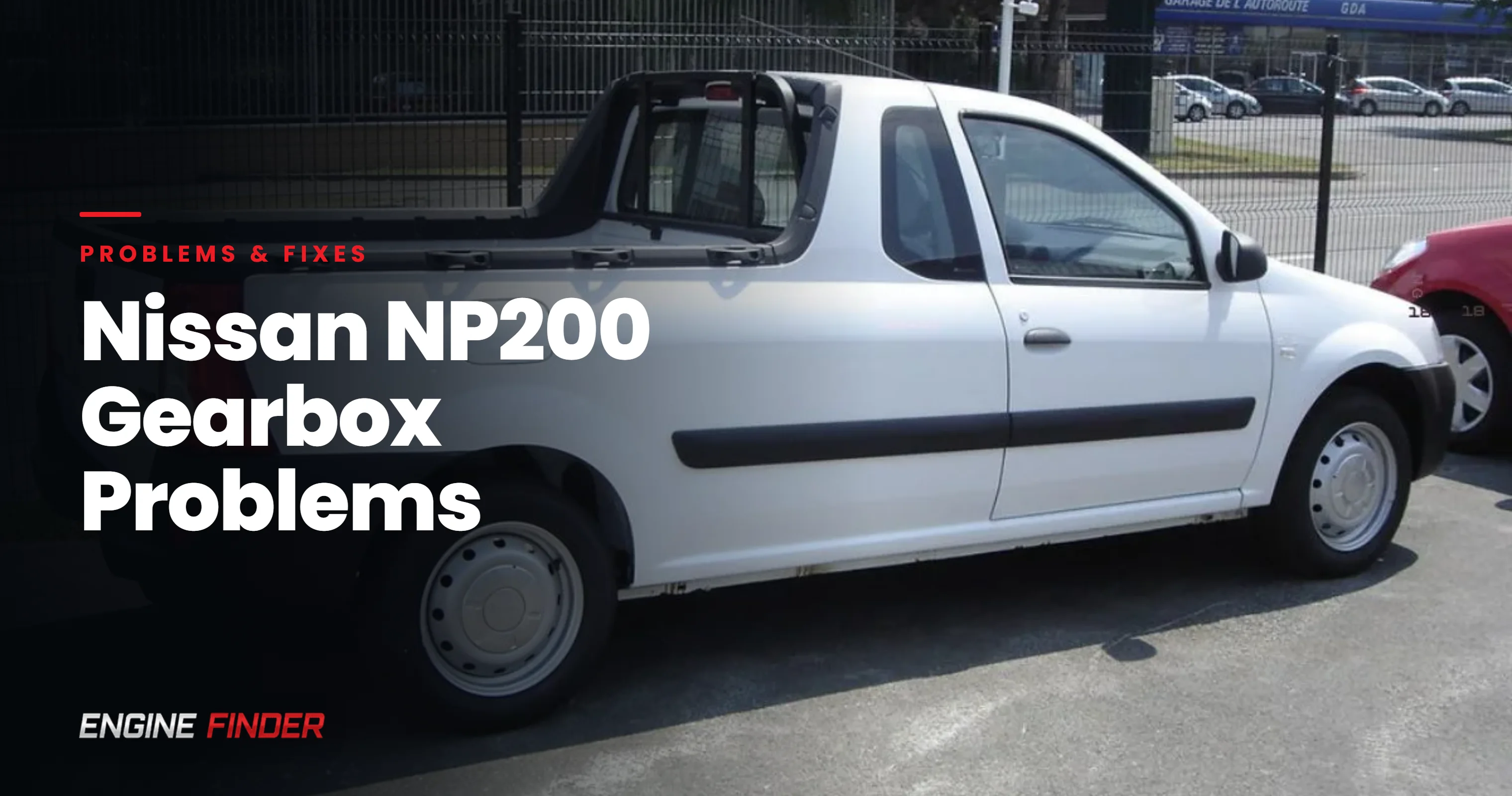
Nissan NP200 Gearbox Problems: JR5 Manual, Clutch & Costs (SA Guide)
Nissan NP200 gearbox problems explained — the Renault JR5/JH3 manual, crunchy shifts, 5th-gear whine, soft-clutch cylinder faults, and what a used or recon NP200 gearbox costs in SA.
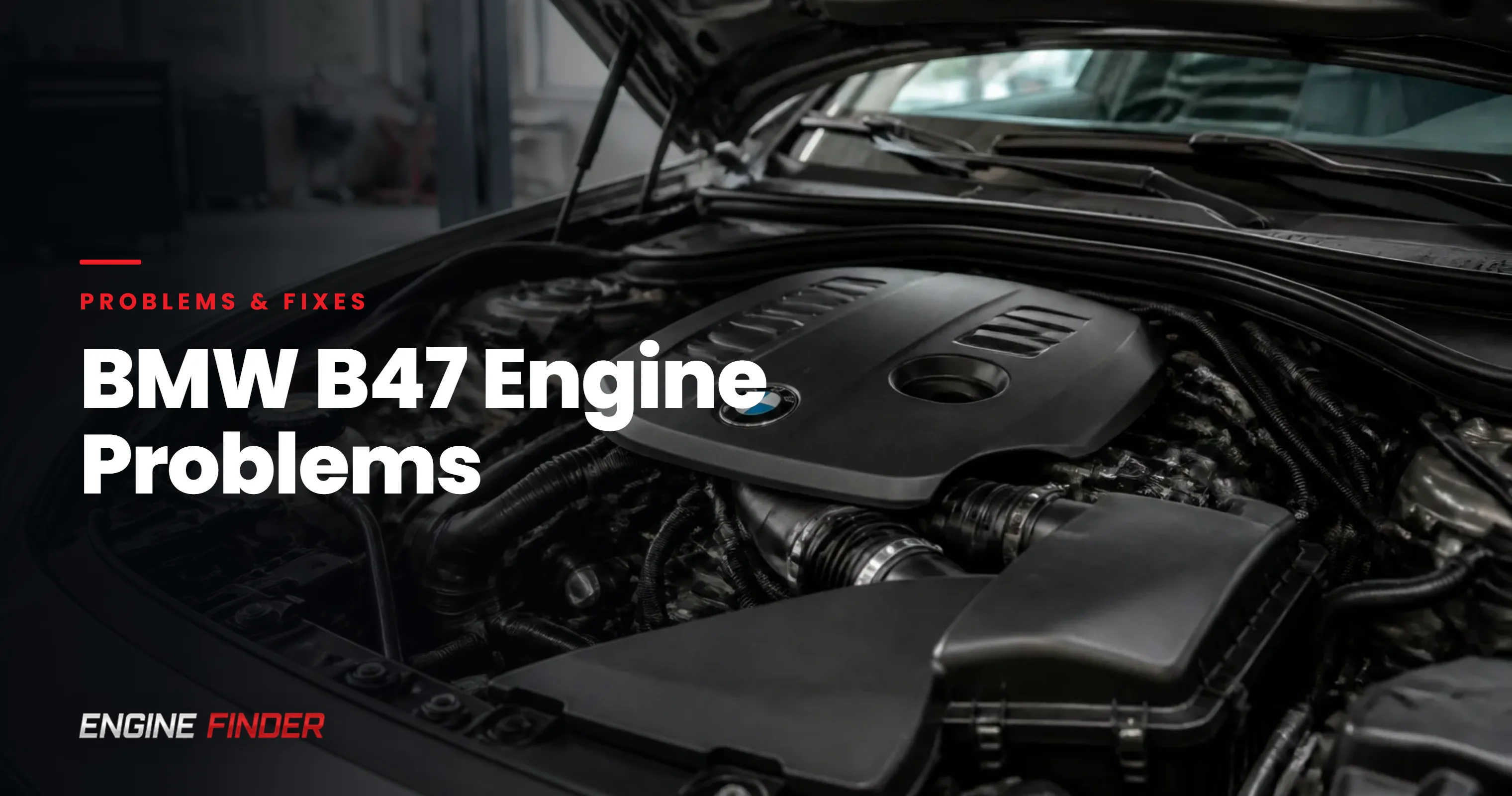
BMW B47 Engine Problems: EGR Recall & SA Repair Costs (2026)
BMW fixed the N47's chain-snap epidemic with the B47 — but the EGR cooler fire-risk recall, DPF clogging and carbon build-up became the new headaches. Symptoms, SA repair costs, and when a used engine wins.
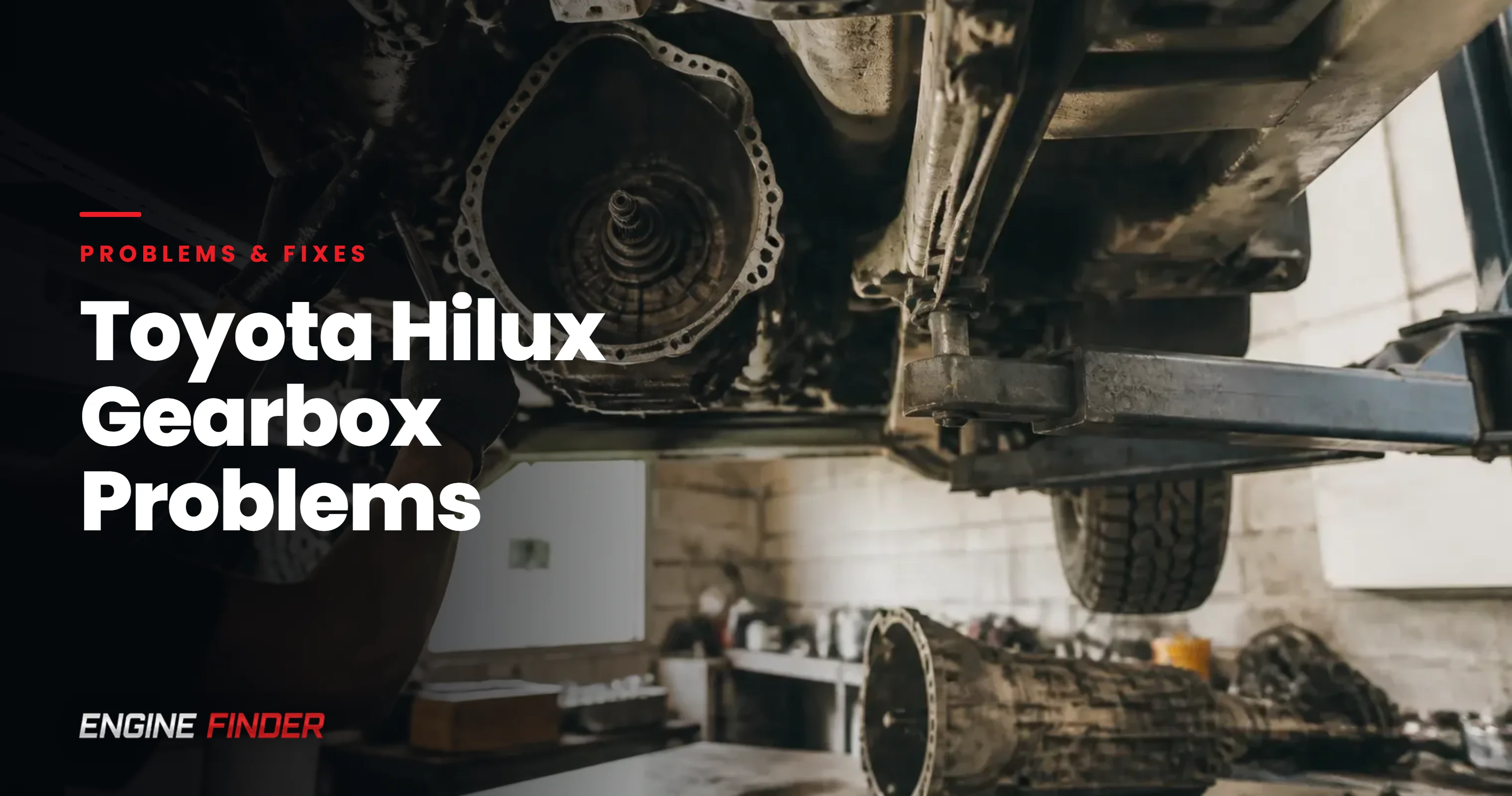
Toyota Hilux Gearbox Problems: GD6, 4Y, Auto & Manual (SA Guide)
Toyota Hilux gearbox problems explained, manual & auto faults, clutch costs, GD6 vs older boxes, and how to compare Hilux gearbox prices in SA.
Important Disclaimer
This content is for informational purposes only and is based on research from automotive industry sources. Engine Finder is not a certified automotive repair facility. Always consult with qualified automotive professionals before performing any repairs or maintenance. Improper repairs can result in personal injury, property damage, or vehicle malfunction. We assume no responsibility for actions taken based on this information.